

A pediatric endocrinologist is a board-certified physician who specializes in the hormonal systems that regulate growth, puberty, and metabolism in children. These specialists evaluate children with growth delays, short stature, or abnormal pubertal timing to determine if a medical condition is present. At HGH for Children, we help families understand the diagnostic process and what to expect during a comprehensive growth assessment.
The Role of a Pediatric Endocrinologist
Many parents assume that a child who is shorter than their peers has a medical problem. In reality, height is heavily influenced by genetics. A pediatric endocrinologist is a doctor who focuses on the endocrine system, which includes glands like the pituitary, thyroid, and adrenal glands. Their primary role is to distinguish between normal genetic variation and a medical condition that requires treatment.
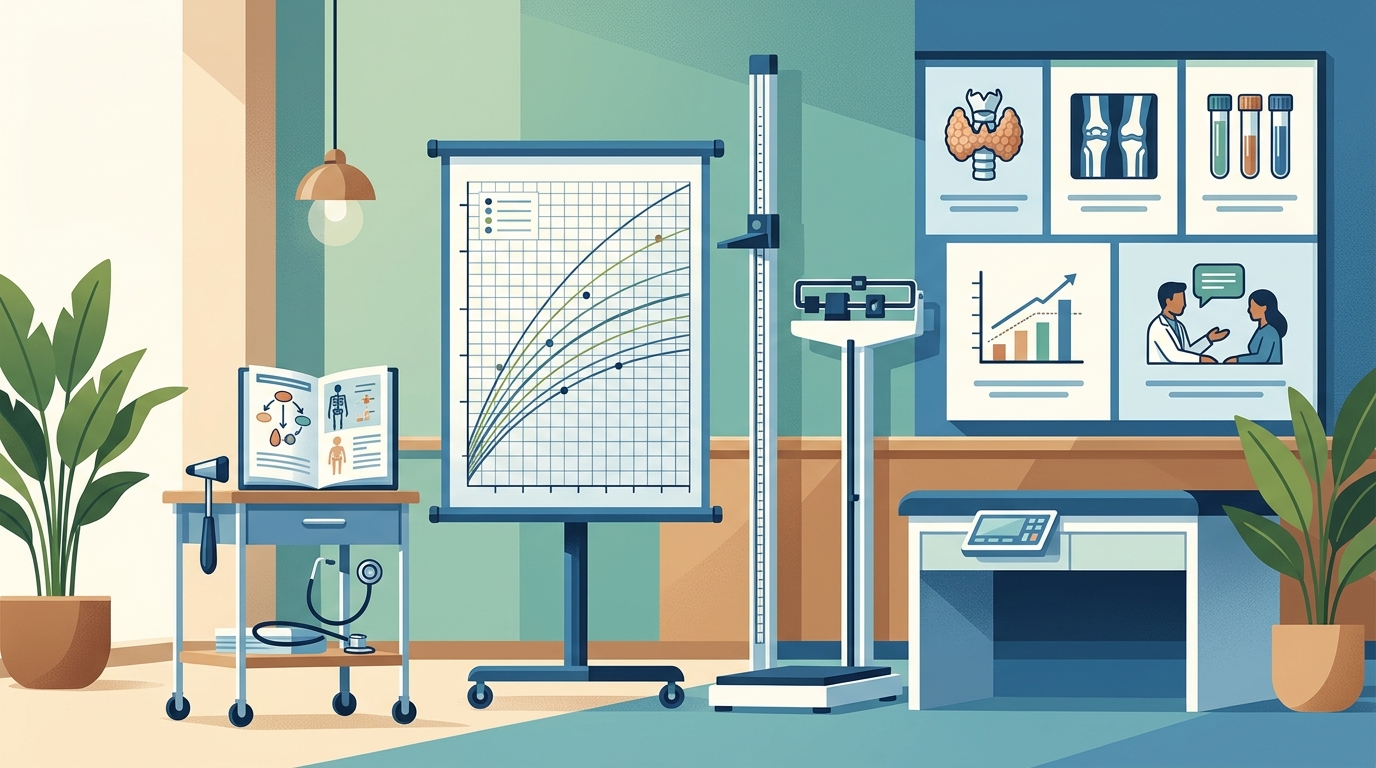
These specialists do not simply measure height. They analyze the entire growth trajectory. A child who has always been in the 10th percentile but grows at a steady rate is often healthy. However, a child who drops from the 50th percentile to the 10th percentile over two years may have an underlying issue. The endocrinologist looks for these changes in velocity rather than just a single static measurement.
Diagnostic Tools and Testing
Diagnosis is the core function of the endocrinologist. They use a combination of physical exams, imaging, and laboratory tests to build a complete picture of a child's health. The most common tool is the bone age X-ray. A bone age X-ray is a radiograph of the left hand and wrist that estimates skeletal maturity. If a 12-year-old has a bone age of 10, it suggests they have more growth potential remaining than a 12-year-old with a bone age of 12.
Blood tests are also critical. The endocrinologist will often order an IGF-1 test. IGF-1, or Insulin-Like Growth Factor 1, is a protein produced by the liver in response to growth hormone. Low levels can indicate growth hormone deficiency, but they can also result from poor nutrition or other chronic conditions. Therefore, a single low number is rarely enough for a diagnosis. The doctor must interpret these results in the context of the child's overall health and growth history.
Common Conditions Evaluated
Not all growth delays are caused by hormones. A pediatric endocrinologist evaluates a wide range of potential causes. One common finding is Constitutional Growth Delay. Constitutional Growth Delay is a normal variation where a child grows and matures later than their peers but eventually reaches a normal adult height. These children are often called "late bloomers."
Other conditions include Growth Hormone Deficiency (GHD). GHD occurs when the pituitary gland does not produce enough growth hormone. This is a relatively rare condition. The endocrinologist must rule out other causes, such as celiac disease, hypothyroidism, or chronic kidney disease, before diagnosing GHD. Accurate diagnosis is essential because treatment protocols differ significantly for each condition.
What to Expect During the Visit
The initial consultation with a growth specialist is a detailed interview. The doctor will ask about the child's birth history, family height, and any medical conditions. They will also review previous growth charts from the child's primary care pediatrician. Bringing these records is crucial because they show the trend over time.
During the physical exam, the doctor will measure height, weight, and body mass index. They will also assess pubertal development. For boys, this involves checking testicular size. For girls, it involves checking breast development. This assessment helps determine if the child is in a growth spurt phase or if puberty is delayed. The visit is not a quick check-up; it is a comprehensive review of the child's developmental history.
Treatment Options and Monitoring
If a medical condition is diagnosed, the endocrinologist will discuss treatment options. For children with confirmed Growth Hormone Deficiency, prescription growth hormone therapy may be recommended. This treatment involves daily injections. It is not a one-time fix; it requires long-term commitment and monitoring. The doctor will regularly check growth velocity and hormone levels to ensure the treatment is working.
For children with Constitutional Growth Delay, treatment is often not necessary. These children typically catch up on their own. The endocrinologist will monitor their growth to ensure they are on track. In some cases, if a child is significantly distressed by their height, the doctor may discuss other options, but the primary goal is to ensure overall health and well-being.
Key Takeaways
- A pediatric endocrinologist is a specialist in hormonal disorders affecting growth and development.
- Bone age X-rays are a standard tool used to estimate skeletal maturity and remaining growth potential.
- Constitutional Growth Delay is a normal variation, not a disease, and often requires no treatment.
- Accurate diagnosis requires reviewing growth velocity over time, not just a single height measurement.
- Blood tests like IGF-1 must be interpreted in the context of overall health and nutrition.
- Bringing previous growth charts from your primary care pediatrician is essential for the specialist's evaluation.
Frequently Asked Questions
What is the difference between a pediatrician and a pediatric endocrinologist?
A pediatrician is a general doctor for children, while a pediatric endocrinologist is a specialist in hormonal systems. Pediatricians often refer children to endocrinologists when growth patterns are unusual or when specific hormonal tests are needed.
How long does a growth evaluation take?
The initial consultation usually takes 45 to 60 minutes. The full diagnostic process may involve multiple visits for blood tests and X-rays over several weeks.
Is growth hormone therapy safe for children?
When prescribed by a qualified specialist for a diagnosed condition, growth hormone therapy is generally considered safe. However, it requires regular monitoring to manage any potential side effects.
Can a child with constitutional growth delay get taller with treatment?
Children with constitutional growth delay typically reach their genetic potential without treatment. Treatment is usually reserved for children with confirmed medical deficiencies.
What should I bring to my first appointment?
Bring all previous growth charts, medical records, and a list of any medications or supplements your child is taking. This helps the specialist see the full picture of your child's development.
Next Steps for Parents
Understanding the role of a pediatric endocrinologist can help parents feel more confident in the diagnostic process. If you have concerns about your child's growth, the first step is to gather their medical records. At HGH for Children, we provide personalized guidance to help you navigate this process. To schedule a consultation, .