

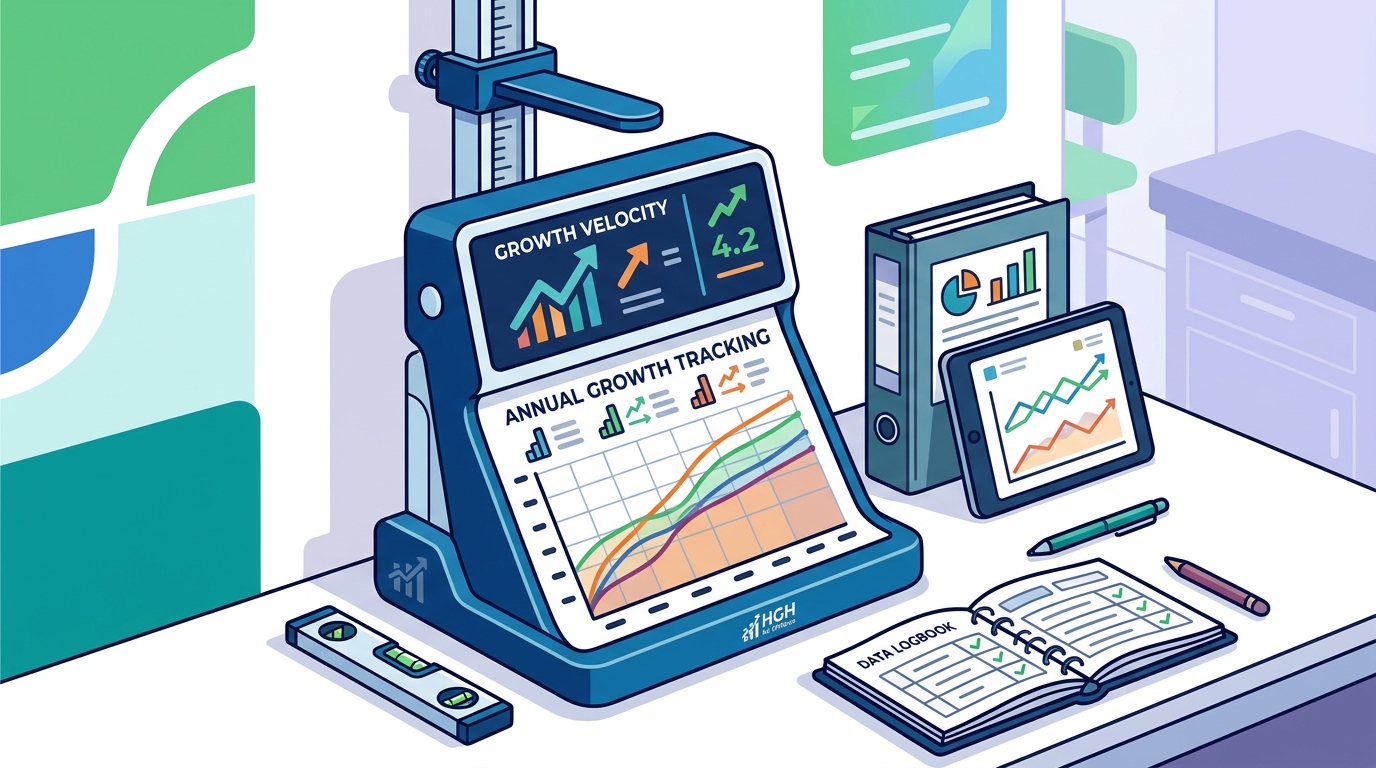
Parents can track their child's growth rate year over year by measuring height consistently and calculating the difference between annual measurements. This metric, known as growth velocity, is more important than a single height percentile. At HGH for Children, we emphasize that consistent data helps distinguish normal variation from potential medical concerns.
Understanding Growth Velocity vs. Percentile
Many parents focus on where their child sits on a growth chart, but the direction of the curve matters more. Growth velocity is the rate of change in height over a specific period, typically measured in inches per year. A child at the 10th percentile who grows 2.5 inches a year is following a healthy pattern. In contrast, a child at the 50th percentile who grows only 1 inch in a year is falling off their expected curve. This distinction is critical for early detection of underlying issues.
The Importance of Consistent Measurement
Accurate tracking requires standardized measurement techniques. Home measurements using doorframes or tape measures are often inconsistent due to posture, time of day, and equipment error. Clinical measurements use stadiometers, which provide precise readings. To track growth effectively, parents should record the date, height, and weight of each measurement. Several accurate measurements taken over time are generally more useful than a single isolated check. This data allows clinicians to calculate true velocity rather than relying on estimated changes.
Expected Growth Ranges by Age
Normal growth rates vary significantly by developmental stage. Understanding these benchmarks helps parents identify when a slowdown is abnormal. The following table summarizes expected annual growth rates for healthy children:
| Age Group | Expected Growth Per Year | Clinical Note |
|---|---|---|
| 1 to 2 years | 4 to 5 inches | Rapid early childhood growth |
| 2 to 4 years | 2.5 to 3.5 inches | Steady pre-school growth |
| 4 years to puberty | 2 to 2.5 inches | Slower steady growth phase |
| Puberty | 3 to 5+ inches | Adolescent growth spurt |
Children who grow less than 2 inches per year after age 4 may warrant further evaluation. This threshold is a general guideline, as individual variation exists. However, a consistent slowing of growth is a stronger indicator of a potential issue than a single low measurement.
Interpreting Data in Clinical Context
Height data does not exist in a vacuum. Clinicians interpret growth velocity alongside bone age, puberty status, and family history. Bone age is a measure of skeletal maturity determined by X-ray, which indicates how much growth potential remains. A child with delayed bone age may have more time to grow, even if their current velocity is low. Conversely, a child with advanced bone age and low velocity may have limited remaining growth potential. This context is essential for making informed decisions about monitoring or treatment.
When to Seek Professional Evaluation
Parents should consider a professional evaluation if they notice specific red flags. These include a decline in height percentile over several years, a growth rate below 2 inches per year after age 4, or a significant gap between the child's height and their predicted adult height based on parental stature. Poor growth velocity can be a sign of various conditions, including hormonal imbalances or chronic illness. Early evaluation allows for a comprehensive assessment, including laboratory testing and growth chart analysis. At HGH for Children, we review these factors to determine if further investigation is appropriate.
Key Takeaways
- Growth velocity is more important than a single height percentile for assessing health.
- Consistent, standardized measurements are required for accurate tracking.
- Normal growth rates vary by age, with 2 to 2.5 inches per year typical for pre-pubertal children.
- Bone age and puberty status provide essential context for interpreting growth data.
- A growth rate below 2 inches per year after age 4 may warrant medical evaluation.
- Family history helps establish expected adult height ranges.
- Professional evaluation can distinguish normal variation from underlying medical conditions.
Frequently Asked Questions
How often should I measure my child's height?
For home tracking, measuring every 3 to 6 months is sufficient to calculate annual velocity. Clinical evaluations typically occur annually or as directed by a provider. Consistency in measurement technique is more important than frequency.
Is it normal for growth to slow down?
Yes, growth rates naturally slow after age 4 and accelerate again during puberty. A gradual slowing is normal, but a significant drop below expected ranges for the child's age may require evaluation.
Can I use a home tape measure for accurate tracking?
Home measurements can be useful for trends, but they are less precise than clinical stadiometers. If using a tape measure, ensure the child stands straight and measure at the same time of day to minimize error.
What is the role of bone age in growth tracking?
Bone age assesses skeletal maturity and helps predict remaining growth potential. It provides context for growth velocity, helping clinicians determine if a child is on track to reach their genetic height potential.
When should I be concerned about my child's growth?
Concern is warranted if growth velocity drops below 2 inches per year after age 4, if height percentiles decline significantly, or if there is a large discrepancy between the child's current trajectory and family height patterns.
Does HGH for Children offer growth tracking services?
Yes, HGH for Children provides comprehensive growth evaluations that include detailed growth chart analysis, bone age assessment, and hormone testing to monitor development.
Start Tracking with Confidence
Tracking your child's growth rate is a proactive step toward understanding their development. By focusing on velocity, maintaining consistent records, and seeking professional guidance when patterns change, parents can make informed decisions. Contact HGH for Children to schedule a consultation and begin building a clear picture of your child's growth journey.