

Growth plates, also known as epiphyses, are areas of developing cartilage at the ends of long bones that determine a child's height. These plates remain open and active throughout childhood and adolescence, allowing bones to lengthen. Eventually, the cartilage hardens into bone, a process called fusion, which permanently stops longitudinal growth. Understanding these stages helps parents and clinicians assess remaining growth potential.
1. Active Cartilage Proliferation
Growth plates begin life as active zones of cartilage cell division. In early childhood, the cells within the growth plate multiply rapidly to create new cartilage. This phase is critical for establishing the foundational length of the long bones. The rate of cell division is influenced by genetics, nutrition, and overall health.
2. Chondrocyte Hypertrophy
Cartilage cells enlarge and mature as they move toward the bone. As new cartilage cells are produced, they gradually increase in size. This enlargement, or hypertrophy, pushes the growth plate outward, extending the bone length. This stage is where the majority of physical height gain occurs during the growth spurt.
3. Calcification of the Cartilage Matrix
The cartilage matrix begins to harden and prepare for replacement by bone. As the cartilage cells reach the end of their life cycle, they die and the surrounding matrix becomes calcified. This creates a rigid scaffold that serves as a template for new bone formation. The transition from soft cartilage to hard bone begins here.
4. Osteoblast Invasion and Bone Formation
Bone-forming cells invade the calcified cartilage to build new bone tissue. Osteoblasts, the cells responsible for bone creation, migrate into the calcified zone. They deposit new bone tissue over the cartilage scaffold, effectively replacing the growth plate with solid bone. This process is essential for the structural integrity of the mature skeleton.
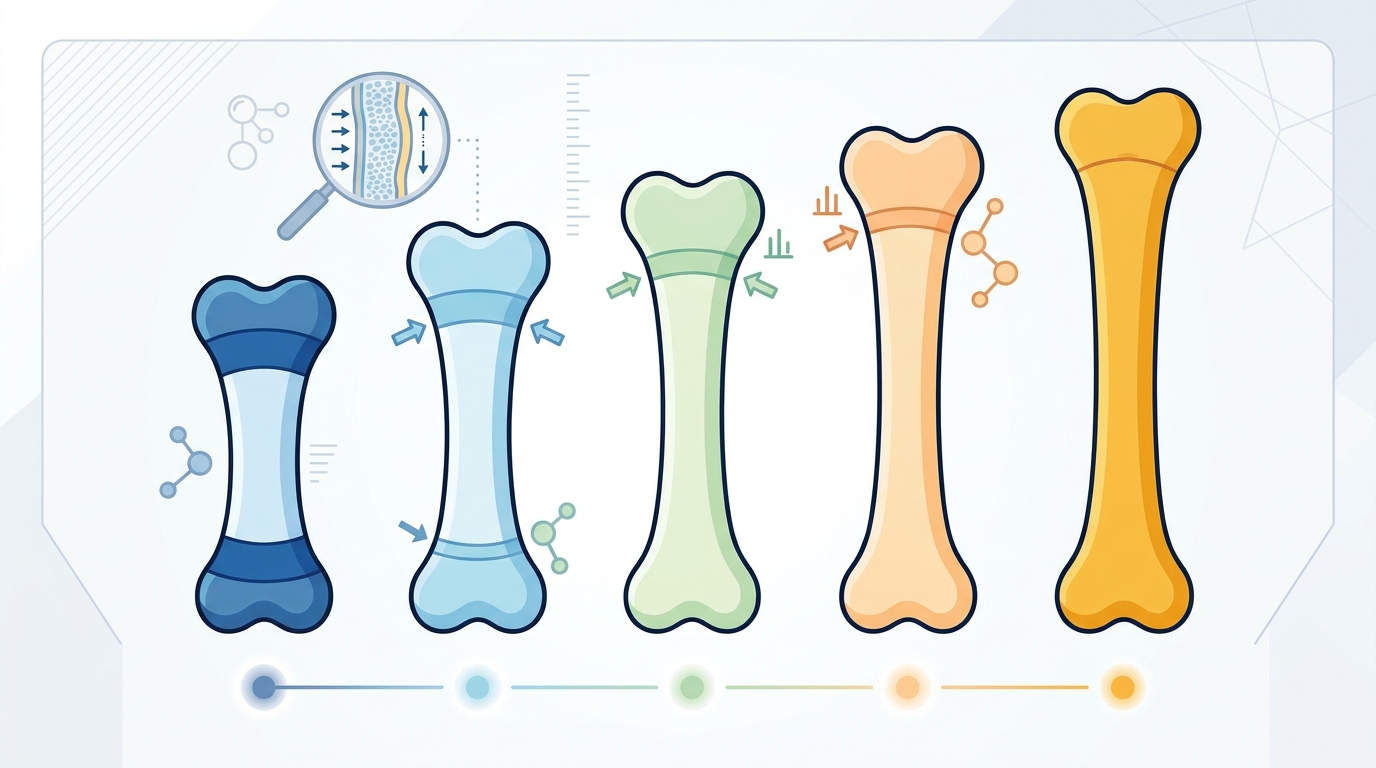
5. Complete Fusion and Epiphyseal Closure
The growth plate disappears entirely as the bone fully fuses. Once the cartilage is completely replaced by bone, the growth plate is no longer visible on X-rays. This is known as epiphyseal closure. After this stage, the long bones can no longer lengthen, and adult height is reached. The timing of this closure varies significantly between individuals and sexes.
Choosing the Right Evaluation for Your Child
When determining where a child stands in these stages, a bone age X-ray is the standard clinical tool. This imaging test compares the child's skeletal maturity to standard reference charts. If you are concerned about your child's growth pattern or the timing of their growth spurt, a professional evaluation can provide clarity. At HGH for Children, we specialize in interpreting these developmental markers to help families understand their child's growth trajectory.
Frequently Asked Questions
What is a growth plate?
A growth plate is a specialized area of cartilage at the ends of long bones that allows for bone lengthening during childhood and adolescence.
How do we know when growth plates have closed?
Growth plate closure is confirmed through a bone age X-ray, which shows the disappearance of the cartilage space and the fusion of the epiphysis to the metaphysis.
Can growth plates reopen after they close?
No, once growth plates have fully fused and turned into bone, they cannot reopen. Longitudinal growth is permanently stopped at this point.
Does nutrition affect the speed of growth plate closure?
While nutrition is vital for healthy growth, the timing of growth plate closure is primarily driven by hormonal changes associated with puberty, particularly estrogen and testosterone levels.
Is it possible to predict exactly when a child will stop growing?
Clinicians can estimate remaining growth potential using bone age and current growth velocity, but exact timing can vary due to individual biological differences.