

Insurance Coverage Criteria
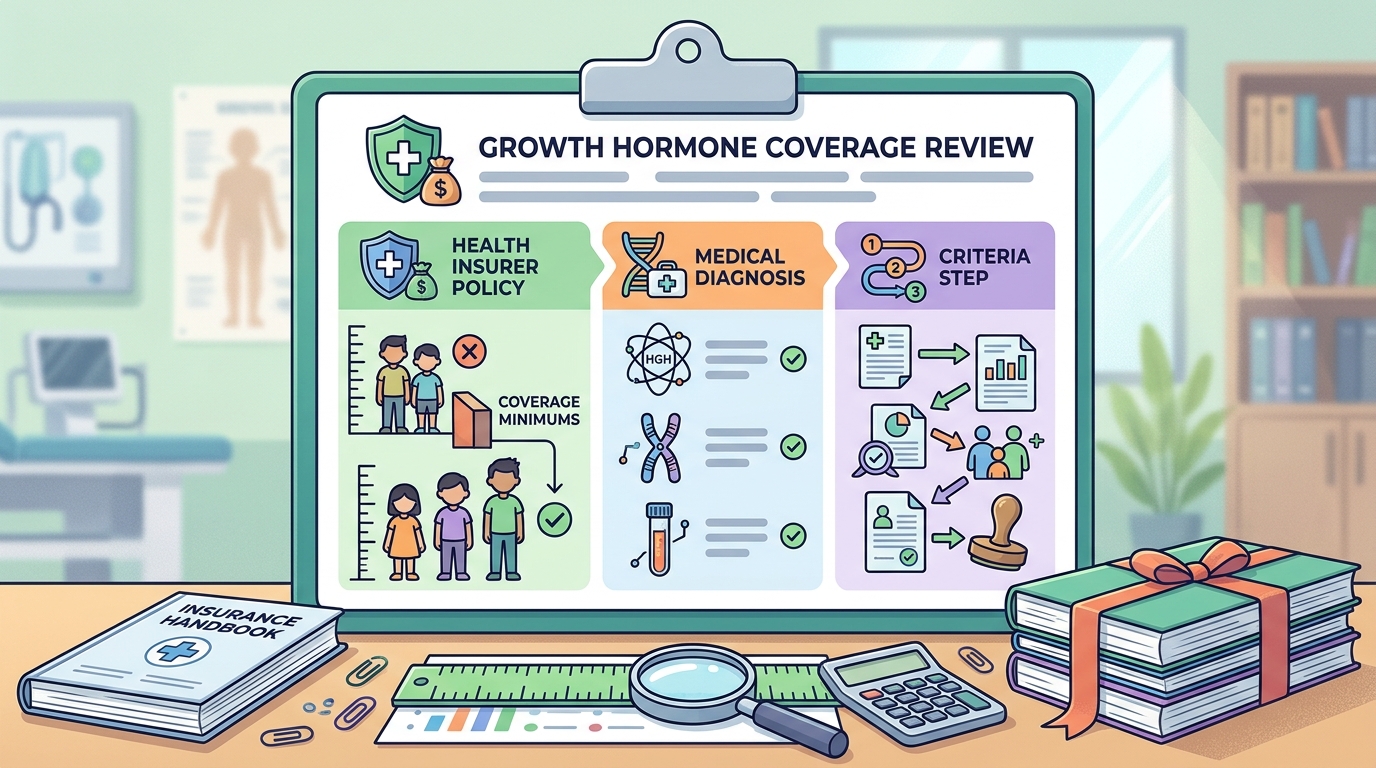
Health insurers do not cover growth hormone therapy for every child who is short. Coverage is typically limited to specific, documented medical conditions. Understanding these criteria is the first step in determining if your child qualifies for insurance benefits.
Eligible Medical Diagnoses
Most insurance plans cover recombinant human growth hormone (HGH) when a child has a confirmed diagnosis of Growth Hormone Deficiency (GHD). GHD is a condition where the pituitary gland does not produce enough growth hormone for normal development. Insurers also frequently cover therapy for children born Small for Gestational Age (SGA) who have failed to achieve catch-up growth by age two. Other covered conditions may include Turner syndrome, chronic kidney disease, or Prader-Willi syndrome. It is important to note that being naturally short or having constitutional growth delay usually does not qualify for insurance coverage.
The Role of IGF-1 and Bone Age
Insurers require objective data to confirm a diagnosis. Insulin-Like Growth Factor-1 (IGF-1) is a hormone produced by the liver in response to growth hormone. Low IGF-1 levels can support a diagnosis of GHD, but they do not confirm it on their own. Clinicians must interpret IGF-1 alongside other factors. Bone age is another critical metric. A delayed bone age indicates that a child's skeleton is less mature than their chronological age. While this suggests remaining growth potential, insurers require that bone age be interpreted in the context of the child's overall growth velocity and family history.
Exclusions and Limitations
Many plans exclude coverage for idiopathic short stature, which is short stature without an identifiable underlying disease. They also typically exclude coverage for constitutional growth delay, often called being a late bloomer. If a child is growing at a normal velocity for their age and has a family history of short stature, insurance will likely deny the claim. HGH for Children emphasizes that accurate diagnosis is essential. Misdiagnosing a normal variation as a medical disorder can lead to denied claims and unnecessary treatment.
Prior Authorization Requirements
Even when a child has a covered diagnosis, insurers require prior authorization before they will pay for HGH therapy. This process ensures that the treatment is medically necessary and appropriate for the specific patient. Failing to meet these requirements is a common reason for claim denials.
Required Documentation
Insurers typically require a comprehensive packet of documents. This includes a detailed growth chart showing height and weight over time. The chart must demonstrate poor growth velocity, often defined as growing less than 2 inches per year after age four. The packet must also include results from stimulation testing, which is the gold standard for diagnosing GHD. Additionally, insurers require a bone age X-ray and IGF-1 lab results. All documents must be signed by a qualified healthcare provider.
The Approval Process
The prior authorization process can take several weeks. During this time, an insurance medical director reviews the submitted documents. They check for consistency between the diagnosis, the lab results, and the growth history. If the documentation is incomplete or contradictory, the insurer may issue a denial. Families can appeal a denial by providing additional evidence or a letter of medical necessity. HGH for Children assists families in preparing these documents to ensure they meet insurer standards.
Common Reasons for Denial
Denials often occur due to missing data or misinterpretation of results. For example, a low IGF-1 level might be attributed to poor nutrition rather than GHD. If the growth chart does not show a clear decline in velocity, the insurer may argue that the child is a late bloomer. Another common reason is the lack of stimulation testing. Some insurers will not accept IGF-1 levels alone as proof of GHD. Understanding these pitfalls helps families prepare a stronger case for approval.
| Factor | Insurance Requirement | Clinical Significance |
|---|---|---|
| Growth Velocity | Must show decline or low rate | Indicates potential growth disorder |
| Bone Age | Must be delayed or consistent | Estimates remaining growth potential |
| Stimulation Testing | Often required for GHD | Gold standard for diagnosis |
Key Takeaways
- Insurance coverage for HGH is limited to specific medical diagnoses like GHD and SGA.
- Constitutional growth delay and idiopathic short stature are typically not covered.
- Prior authorization is mandatory and requires a complete documentation packet.
- IGF-1 levels must be interpreted alongside growth velocity and bone age.
- Stimulation testing is often required to confirm a diagnosis of GHD.
- Accurate diagnosis is critical to avoid claim denials and unnecessary treatment.
- HGH for Children helps families prepare the clinical evidence needed for insurance approval.
Frequently Asked Questions
Does insurance cover HGH for short stature?
Insurance typically does not cover HGH for short stature alone. Coverage requires a specific medical diagnosis, such as Growth Hormone Deficiency or Small for Gestational Age. Being short without an underlying condition is usually not covered.
What is prior authorization for HGH therapy?
Prior authorization is a process where the insurer reviews medical documents before approving payment. It ensures the treatment is medically necessary. Families must submit growth charts, lab results, and diagnosis details.
Can I appeal an insurance denial for HGH?
Yes, families can appeal a denial. The appeal should include additional evidence, such as a letter of medical necessity or updated lab results. HGH for Children can help prepare the documentation for an appeal.
Does low IGF-1 guarantee insurance coverage?
No, low IGF-1 does not guarantee coverage. Insurers require that IGF-1 be interpreted in the context of growth velocity and other factors. A low level alone is not sufficient for approval.
How long does prior authorization take?
The process can take several weeks. The timeline depends on the insurer and the completeness of the submitted documents. Incomplete packets often lead to delays or denials.
Is bone age required for insurance approval?
Yes, bone age is typically required. It helps estimate remaining growth potential. Insurers use this data to determine if the child has enough time to benefit from therapy.
Conclusion
Navigating insurance coverage for pediatric growth hormone therapy requires a clear understanding of medical criteria and administrative requirements. HGH for Children provides the specialized evaluation needed to determine if your child qualifies for coverage. By focusing on accurate diagnosis and thorough documentation, families can improve their chances of approval. To begin the process, for a personalized growth evaluation.