

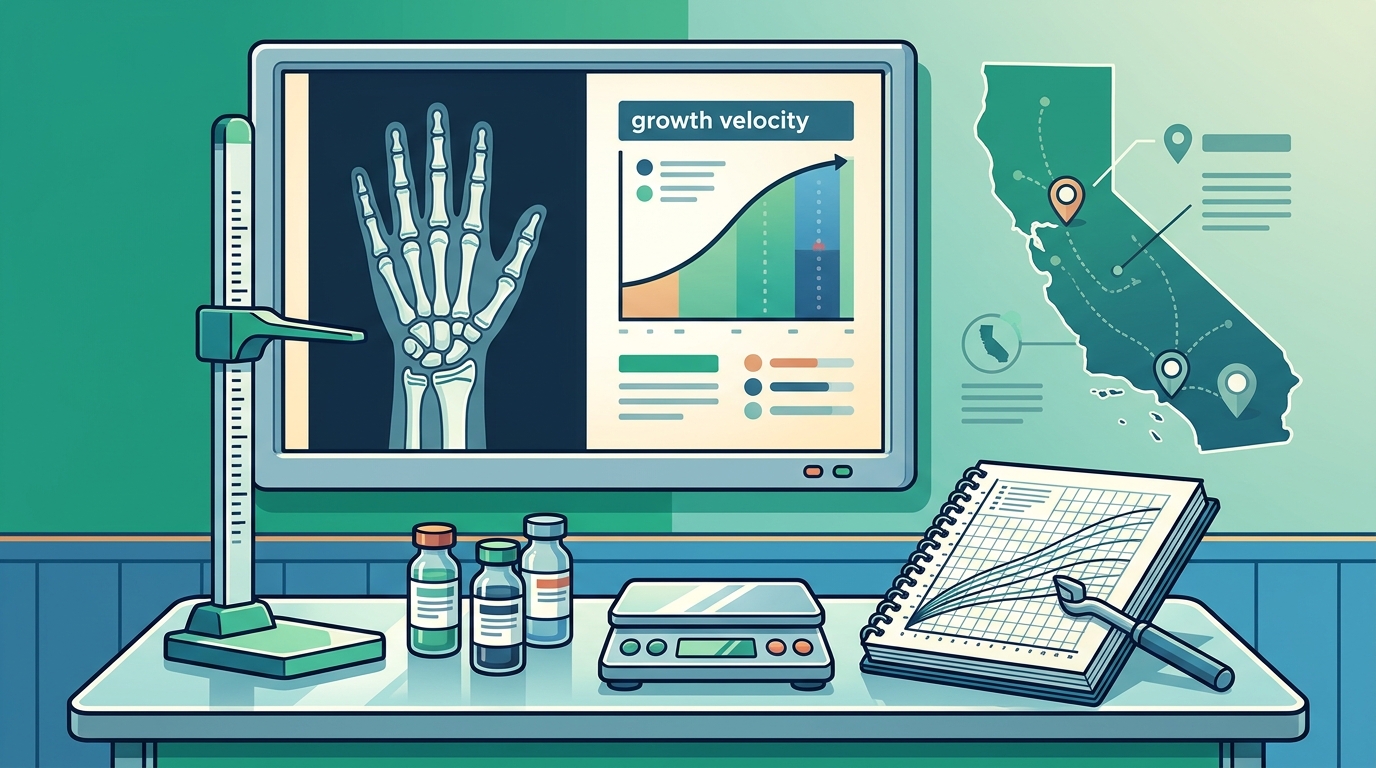
In California, pediatric endocrinologists and specialized pediatric growth clinics evaluate children for growth hormone deficiency. These professionals use bone age imaging, hormone testing, and growth velocity analysis to distinguish medical conditions from normal variation. This guide explains the roles of these specialists, the diagnostic process, and how families can find appropriate care. according to Identifying Employees Children
Pediatric Endocrinologists
Pediatric endocrinologists are board-certified physicians who specialize in the hormonal systems of infants, children, and adolescents. They are the primary medical professionals responsible for diagnosing and managing growth hormone deficiency (GHD). GHD is a condition where the pituitary gland does not produce enough growth hormone for normal development. These doctors undergo extensive training in endocrinology, which includes the study of glands, hormones, and metabolism. according to Identifying Employees Children
Scope of Practice
Endocrinologists evaluate a wide range of growth concerns, including short stature, delayed puberty, and poor growth velocity. They interpret complex laboratory results, such as insulin-like growth factor 1 (IGF-1) levels and stimulation tests. Their role is to determine if a child's growth pattern represents a medical disorder or a normal variation, such as constitutional growth delay.
Referral Pathways
Most families first consult their primary care pediatrician. If the pediatrician notices a child falling off their growth curve or growing less than 2 inches per year, they may refer the family to a pediatric endocrinologist. This referral ensures that the child receives a specialized evaluation rather than a general check-up. according to FAQs Parents Families
Specialized Pediatric Growth Clinics
Beyond traditional endocrinology departments, specialized pediatric growth clinics offer focused care for children with growth concerns. These clinics often employ naturopathic doctors or integrative physicians who specialize in growth optimization. For example, HGH for Children is led by Dr. Devin Stone, ND, a licensed naturopathic doctor specializing in pediatric growth evaluation. These clinics provide a dedicated environment for families seeking answers about their child's height and development. according to IGF 1 Insulin
Integrative Approach
Specialized clinics often take a holistic view of growth. They consider nutrition, sleep, stress, and hormonal balance alongside standard medical testing. This approach helps identify underlying factors that might affect growth, such as thyroid issues or nutritional deficiencies. The goal is to provide a comprehensive picture of the child's health before recommending any treatment. according to Structural analysis of
Telemedicine Options
The Diagnostic Process
Diagnosing growth hormone deficiency requires a structured evaluation that combines history, physical examination, and laboratory testing. No single test can confirm GHD in isolation. Clinicians must interpret all findings together to make an accurate diagnosis.
Growth Velocity and Charts
The first step is reviewing the child's growth history. Clinicians plot height and weight on standardized growth charts to calculate growth velocity. A child who grows less than 2 inches (5 cm) per year after age 4 may warrant further evaluation. Falling height percentiles over time is a key indicator that something may be affecting growth.
Bone Age Assessment
Bone age is a measure of skeletal maturity, typically determined by an X-ray of the left hand and wrist. It helps estimate remaining growth potential. In constitutional growth delay, bone age is often delayed, meaning the child has more time to grow. In GHD, bone age may also be delayed, but the growth velocity is typically poor. Understanding bone age is crucial for predicting adult height.
Hormone Testing
Blood tests measure hormone levels, including IGF-1 and IGFBP-3. IGF-1 is produced by the liver in response to growth hormone. Low IGF-1 levels can suggest GHD, but they can also result from poor nutrition or other conditions. Therefore, IGF-1 must be interpreted in the context of the child's age, pubertal stage, and overall health. In some cases, stimulation tests are performed to directly assess growth hormone production.
| Diagnostic Tool | Purpose | Key Insight |
|---|---|---|
| Growth Charts | Track height and weight over time | Identifies growth velocity and percentile changes |
| Bone Age X-ray | Assess skeletal maturity | Estimates remaining growth potential |
| IGF-1 Blood Test | Measure growth hormone activity | Low levels may indicate GHD or other issues |
| Stimulation Tests | Directly test GH production | Gold standard for confirming GHD |
Finding Care in California
California has numerous options for families seeking growth evaluations. Major medical centers in Los Angeles, San Francisco, and San Diego have dedicated pediatric endocrinology departments. Additionally, specialized clinics like HGH for Children in San Diego offer focused care for growth concerns. Families should consider the specialist's experience, the clinic's approach, and the availability of telemedicine when choosing a provider.
Questions to Ask
When selecting a provider, ask about their experience with GHD and constitutional growth delay. Inquire about their diagnostic process and whether they use bone age imaging. Also, ask about their approach to treatment, including whether they recommend growth hormone therapy, monitoring, or other interventions. A good provider will explain the findings in plain language and involve the family in decision-making.
Insurance and Coverage
Growth hormone therapy can be expensive, and insurance coverage varies. Some plans cover HGH for confirmed GHD, while others may not cover it for idiopathic short stature. Families should check with their insurance provider before starting treatment. Specialized clinics can often help navigate the insurance approval process.
Key Takeaways
- Pediatric endocrinologists are the primary specialists for diagnosing growth hormone deficiency.
- Specialized growth clinics offer focused care and may use integrative approaches.
- Diagnosis requires a combination of growth charts, bone age X-rays, and hormone testing.
- Low IGF-1 alone does not confirm GHD; it must be interpreted in context.
- Bone age helps estimate remaining growth potential and distinguishes GHD from constitutional delay.
- Telemedicine is increasingly available for initial evaluations and monitoring in California.
- Families should choose providers who explain findings clearly and involve them in decisions.
- Insurance coverage for growth hormone therapy varies and should be verified before treatment.
Frequently Asked Questions
Who can diagnose growth hormone deficiency in children?
Pediatric endocrinologists are the primary specialists who diagnose growth hormone deficiency. They use a combination of growth charts, bone age imaging, and hormone testing to make an accurate diagnosis.
Is a low IGF-1 level enough to diagnose GHD?
No, a low IGF-1 level alone is not enough to diagnose GHD. IGF-1 can be low for many reasons, including poor nutrition or other medical conditions. It must be interpreted alongside growth velocity, bone age, and other clinical findings.
What is bone age and why is it important?
Bone age is a measure of skeletal maturity, typically determined by an X-ray of the hand and wrist. It helps estimate how much growth potential a child has remaining. Delayed bone age can indicate constitutional growth delay or GHD.
Can naturopathic doctors diagnose GHD?
Naturopathic doctors can evaluate growth concerns and order tests, but they typically work in collaboration with or refer to medical doctors for definitive diagnoses and prescription treatments. Their role is often focused on holistic care and monitoring.
How much does a growth evaluation cost?
Costs vary depending on the provider and the tests ordered. An initial consultation may range from a few hundred to over a thousand dollars. Insurance may cover part of the cost, especially if a medical condition is diagnosed.
Is telemedicine a good option for growth evaluations?
What is constitutional growth delay?
Constitutional growth delay is a normal variation where children grow and mature later than their peers. They are often shorter than classmates but eventually reach a normal adult height. It is not a disease and usually does not require treatment.
Conclusion
Finding the right specialist is the first step in understanding your child's growth. Pediatric endocrinologists and specialized clinics like HGH for Children provide the expertise needed to distinguish medical conditions from normal variation. By understanding the diagnostic process and asking the right questions, families can make informed decisions about their child's care. If you have concerns about your child's growth, consider scheduling a consultation with a qualified provider.