

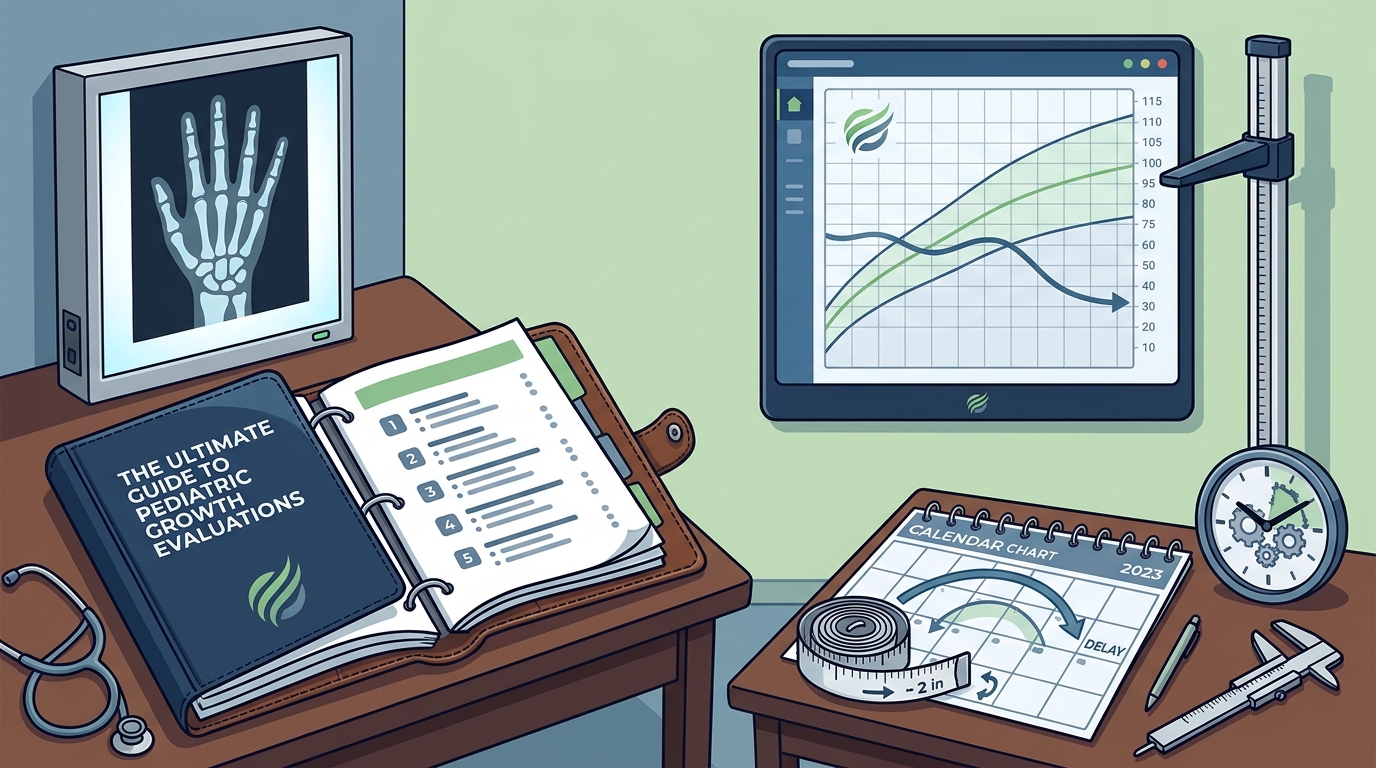
Warning signs that a child needs a growth evaluation include falling height percentiles, growth velocity below 2 inches per year, delayed bone age, and delayed puberty. HGH for Children provides this guide to help parents distinguish normal variation from medical concerns. This ultimate guide covers how to choose a provider, verify credentials, understand costs, and navigate the evaluation process effectively.
How to Choose a Growth Clinic
Choosing the right provider is the first critical step in addressing growth concerns. A reputable clinic focuses on comprehensive diagnosis rather than immediate treatment sales. Parents should look for providers who emphasize data-driven evaluations, including growth velocity analysis and bone age assessment, before discussing any interventions.
Diagnostic Depth vs. Treatment Focus
Many clinics push for immediate hormone therapy without thorough investigation. A high-quality provider, such as Dr. Devin Stone at HGH for Children, prioritizes understanding the underlying cause. They will review family history, nutritional status, and chronic health conditions before suggesting treatment. This approach ensures that normal variations, like constitutional growth delay, are not misdiagnosed as disorders requiring medication.
Specialization in Pediatric Growth
General pediatricians are excellent for routine care but may lack the specialized training required for complex growth hormone issues. Look for providers who specialize specifically in pediatric endocrinology or growth disorders. Specialization often translates to more nuanced interpretations of lab results and bone age X-rays, leading to more accurate diagnoses and tailored care plans.
What to Ask Before Committing
Before booking an appointment, parents should ask specific questions to gauge the provider's approach. These questions help clarify the scope of the evaluation and the provider's philosophy on treatment.
Key Questions for Providers
- What specific tests are included in the initial evaluation?
- How do you distinguish between constitutional growth delay and growth hormone deficiency? according to How do I
- What is your protocol for monitoring progress after treatment begins?
- Do you offer telemedicine options for follow-up visits?
Providers who answer these questions with transparency and detail are often more reliable. They should be willing to explain the limitations of their tests and the uncertainty involved in predicting adult height. Avoid providers who guarantee specific height outcomes or promise rapid results without a thorough diagnostic process.
How to Verify Credentials and Claims
Verifying a provider's credentials is essential for ensuring safety and efficacy. Parents should check state medical boards to confirm that the provider is licensed and in good standing. For naturopathic doctors, verify their license with the relevant state naturopathic board.
Checking Board Certifications
Board certification in pediatric endocrinology or a related field is a strong indicator of expertise. While not all growth specialists are board-certified endocrinologists, those who are have undergone rigorous training and examination. Parents can verify these certifications through the American Board of Medical Specialties or equivalent bodies. Additionally, check for any disciplinary actions or complaints on the provider's state license record.
How the Evaluation Process Works
A comprehensive growth evaluation typically involves several steps, each designed to build a complete picture of the child's development. The process usually begins with a detailed medical history and physical examination.
Step-by-Step Evaluation
- Growth Chart Analysis: Reviewing height and weight percentiles over time to calculate growth velocity. according to VETUSD Live Chart
- Bone Age Assessment: Taking an X-ray of the left hand and wrist to estimate skeletal maturity.
- Laboratory Testing: Blood tests to check hormone levels, including IGF-1 and thyroid function.
- Pubertal Staging: Assessing physical signs of puberty to determine developmental stage.
This process can take several weeks to complete, depending on the availability of appointments and lab results. The goal is to identify the underlying cause of any growth concerns before deciding on a treatment plan. according to Certify as a
What It Costs and Price Drivers
The cost of a growth evaluation varies based on the complexity of the tests and the provider's fees. Initial consultations may range from a few hundred to over a thousand dollars. Additional costs include X-rays, blood tests, and any subsequent treatment.
Factors Influencing Cost
| Factor | Impact on Cost |
|---|---|
| Number of Lab Tests | More tests mean higher costs. |
| Imaging Requirements | Bone age X-rays add to the total. |
| Provider Type | Specialists often charge more than generalists. according to Officer armed forces |
| Insurance Coverage | Coverage varies by plan and diagnosis. |
Parents should ask for a detailed estimate before starting the evaluation. Understanding the potential costs helps in planning and avoiding financial surprises. Some clinics offer cash-pay options or payment plans for families without insurance coverage.
Common Mistakes and How to Avoid Them
Parents often make mistakes that can delay proper diagnosis or lead to unnecessary treatment. One common error is relying on a single height measurement rather than tracking growth over time. Another is assuming that being short means there is a medical problem, when it may simply be a family trait.
Avoiding Misdiagnosis
It is crucial to provide a complete medical history, including any chronic illnesses or medications. Omitting this information can lead to incorrect conclusions. Additionally, parents should be wary of providers who rush into treatment without a thorough evaluation. A good provider will take the time to rule out other causes before recommending hormone therapy.
Growth Evaluation Versus Alternatives
Some parents consider alternative approaches, such as supplements or lifestyle changes, without a formal evaluation. While these may support overall health, they do not address underlying hormonal or genetic issues. A formal evaluation provides a clear diagnosis and a targeted treatment plan, which is essential for children with true growth disorders.
When Alternatives Are Insufficient
If a child has a diagnosed growth hormone deficiency, supplements alone will not be effective. Similarly, if a child has a pituitary disorder, lifestyle changes will not resolve the issue. A comprehensive evaluation ensures that the right treatment is matched to the specific condition, maximizing the potential for positive outcomes.
Evaluations for Specific Situations
Some children have specific conditions that require tailored evaluation approaches. For example, children born small for gestational age (SGA) may need monitoring for catch-up growth. Those with delayed puberty may require different hormonal assessments than those with short stature.
SGA and Catch-Up Growth
Children born SGA often experience catch-up growth in the first few years of life. If this does not occur, they may remain shorter than average. An evaluation can determine if further intervention is needed to support their growth potential. HGH for Children provides specific guidance for families in this situation.
Rules, Rights, and Protections
Parents have the right to seek a second opinion and to understand the risks and benefits of any proposed treatment. They should also be aware of their rights regarding medical records and privacy. Providers are required to obtain informed consent before starting any treatment, which includes explaining the potential side effects and alternatives.
Informed Consent and Privacy
Informed consent is a legal and ethical requirement. Parents should ensure that they fully understand the treatment plan before agreeing to it. Additionally, medical records are protected by privacy laws, and parents have the right to access and request corrections to their child's records.
Local Specifics for California Families
California families have access to a wide range of growth clinics, but the quality and specialization vary. HGH for Children serves multiple locations across the state, including Orange County, San Diego, Los Angeles, and San Francisco. This geographic spread allows families to access specialized care without traveling long distances.
Telemedicine Options
Many California-based clinics now offer telemedicine services, which can be particularly useful for follow-up visits. This option reduces the burden of travel and can make it easier for families to stay engaged in the evaluation and treatment process. Telemedicine is not a substitute for in-person examinations, but it is a valuable tool for ongoing monitoring.
Timing and How It Changes Outcomes
Timing is a critical factor in growth evaluations. The earlier a condition is identified, the more options are available for treatment. For example, growth hormone therapy is most effective when started before the growth plates close. Delaying evaluation can limit the potential for height gain.
Puberty and Growth Plate Closure
Puberty triggers a growth spurt but also leads to the closure of growth plates. Once the plates close, no further height gain is possible. Therefore, evaluating a child before or during early puberty is crucial. Parents should not wait until a child is a teenager to seek an evaluation if they have concerns about growth.
Results Over Time and Long-Term Expectations
Results from growth evaluations and treatments vary widely. Some children may see significant height gains, while others may have more modest improvements. It is important to set realistic expectations and understand that growth is a gradual process. Regular monitoring is essential to track progress and adjust the treatment plan as needed.
Long-Term Monitoring
Long-term monitoring helps ensure that the treatment is effective and safe. It also allows providers to detect any potential side effects early. Parents should be prepared for ongoing visits and tests, which are a normal part of the growth management process. The goal is to support the child's overall health and development, not just their height.
Key Takeaways
- Falling height percentiles and growth velocity below 2 inches per year are key warning signs.
- Choose a provider who prioritizes comprehensive diagnosis over immediate treatment.
- Verify the provider's credentials and board certifications before committing.
- Understand the costs involved, including tests and potential treatment.
- Avoid common mistakes like relying on single measurements or omitting medical history.
- Timing is crucial; evaluate before growth plates close to maximize options.
- Set realistic expectations and commit to long-term monitoring.
- Utilize local resources and telemedicine options for convenient care.
Frequently Asked Questions
What are the most common warning signs of a growth problem?
The most common warning signs include falling height percentiles, growth velocity below 2 inches per year, delayed bone age, and delayed puberty. These signs indicate that a child's growth pattern may deviate from normal and warrant further evaluation.
How long does a growth evaluation take?
A growth evaluation typically takes several weeks to complete. This includes scheduling appointments, undergoing X-rays and blood tests, and waiting for results. The provider will then review the findings and discuss a treatment plan with the family.
Is growth hormone therapy safe for children?
When appropriately prescribed and monitored, growth hormone therapy is generally safe for children. However, like any medical treatment, it carries potential risks and side effects. A qualified healthcare provider should explain these risks and monitor the child closely during treatment.
Can I get a second opinion on a growth evaluation?
Yes, parents have the right to seek a second opinion. It is a good idea to consult with another specialist if you have doubts about the initial diagnosis or treatment plan. A second opinion can provide additional perspective and peace of mind.
What is constitutional growth delay?
Constitutional growth delay is a normal variation in which children grow and develop later than their peers. They are often shorter than average during childhood but typically reach a normal adult height. It is important to distinguish this from growth hormone deficiency, which may require treatment.
How much does a growth evaluation cost?
The cost of a growth evaluation varies depending on the tests required and the provider's fees. It can range from a few hundred to over a thousand dollars. Insurance coverage may apply, but parents should check with their provider and insurer for specific details.
Can telemedicine be used for growth evaluations?
Telemedicine can be used for follow-up visits and some aspects of the evaluation, such as reviewing lab results. However, in-person examinations and X-rays are still necessary for a comprehensive assessment. Many clinics offer a combination of in-person and telemedicine services.
Conclusion
Identifying warning signs of growth concerns is the first step toward ensuring your child's healthy development. By choosing a reputable provider, asking the right questions, and understanding the evaluation process, parents can make informed decisions about their child's care. Contact HGH for Children to schedule a consultation and take the next step in your child's growth journey.