

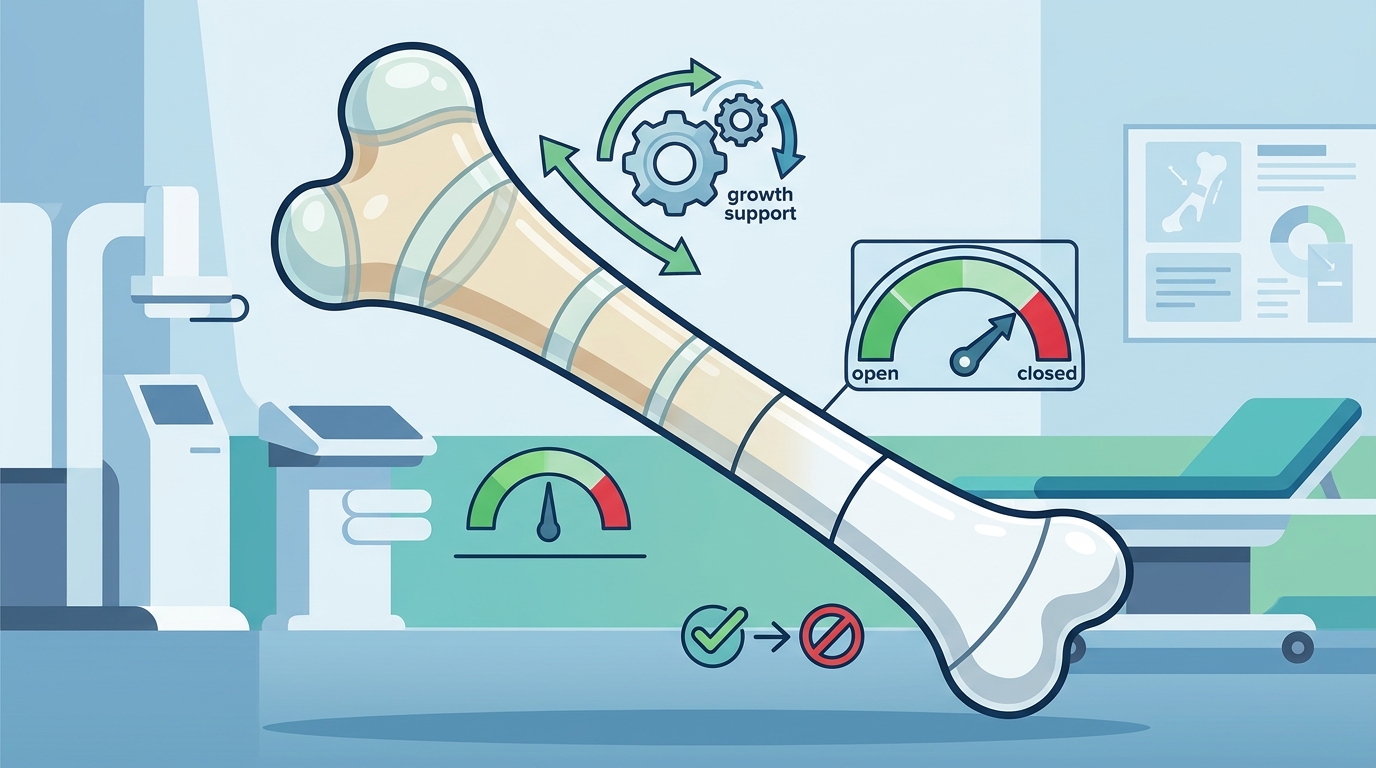
Growth plates close when the cartilage in the epiphysis ossifies into solid bone, a process called epiphyseal fusion. Once this fusion is complete, the long bones can no longer lengthen, and growth hormone therapy stops producing height increases. This biological limit is the primary factor determining the window for pediatric growth interventions.
The Biology of Epiphyseal Fusion
Epiphyseal fusion is the permanent conversion of growth plate cartilage into bone tissue. This process is driven by sex hormones, primarily estrogen, which accelerates the maturation of the skeleton. In girls, fusion typically occurs between ages 14 and 15, while in boys, it generally happens between ages 16 and 18. The exact timing varies based on the onset of puberty and individual genetic factors.
Before fusion, the growth plate contains chondrocytes that proliferate and mature, allowing the bone to lengthen. As puberty progresses, rising hormone levels signal these cells to stop dividing and begin calcifying. This transition is irreversible. Once the growth plate line disappears on an X-ray, the bone has reached its final length. Understanding this timeline is critical for families evaluating treatment options, as the biological clock is not adjustable.
How Clinicians Assess Remaining Growth Potential
Clinicians use a bone age X-ray to estimate skeletal maturity and predict remaining growth potential. This imaging study compares the child's hand and wrist bones to standardized reference images. A delayed bone age suggests the skeleton is younger than the child's chronological age, indicating more time for growth. Conversely, an advanced bone age implies the growth plates are nearing closure, leaving less time for intervention.
At HGH for Children, we emphasize that bone age is a tool for context, not a standalone diagnosis. It must be interpreted alongside growth velocity, pubertal stage, and family history. A child with a delayed bone age may have significant growth potential remaining, while a child with an advanced bone age may have limited time. This assessment helps determine whether treatment can still be effective or if the window has closed.
Impact of Puberty on Growth Plate Closure
Puberty is the primary driver of growth plate closure. The initial growth spurt is triggered by rising sex hormones, but the same hormones eventually cause the growth plates to fuse. Girls typically experience their peak height velocity earlier than boys, leading to earlier fusion. This is why the window for growth hormone therapy is often shorter for girls. Delayed puberty can sometimes extend the growth window, but it does not guarantee additional height if the underlying growth rate is low.
For families concerned about timing, monitoring pubertal development is essential. Signs such as breast development in girls or testicular enlargement in boys mark the start of the process that will eventually end growth. Early evaluation allows clinicians to assess whether the child is on a trajectory that will allow for meaningful height gains before fusion occurs. Waiting until the growth spurt has passed may limit treatment options.
Treatment Efficacy After Growth Plate Closure
Once growth plates have fused, growth hormone therapy no longer increases height. The hormone stimulates cartilage cell division in the growth plate, but if that cartilage has turned to bone, there is no tissue left to stimulate. This is a fundamental biological limit, not a failure of the medication. Therefore, the goal of pediatric growth care is to intervene before fusion is complete.
For children who have already fused, treatment may still address other aspects of health, such as body composition or metabolic function, but it will not change adult height. Families should have realistic expectations about outcomes. A comprehensive evaluation can clarify whether the growth plates are still open and how much time remains. This information is crucial for making informed decisions about treatment and follow-up care.
Key Takeaways
- Growth plates close when cartilage ossifies into bone, a process called epiphyseal fusion.
- Fusion typically occurs between ages 14-15 in girls and 16-18 in boys.
- Bone age X-rays help estimate skeletal maturity and remaining growth potential.
- Puberty drives growth plate closure through the action of sex hormones.
- Growth hormone therapy is ineffective for height increase after growth plate fusion.
- Early evaluation is critical to determine if the window for treatment is still open.
Frequently Asked Questions
Can growth plates reopen after they close?
No, epiphyseal fusion is a permanent process. Once the growth plate has fused, it cannot reopen, and the bone can no longer lengthen.
How do I know if my child's growth plates are closed?
A bone age X-ray of the hand and wrist is the standard method for assessing skeletal maturity and determining if the growth plates have fused.
Does delayed puberty mean more time for growth?
Delayed puberty can extend the time before growth plate closure, but it does not guarantee additional height. The underlying growth rate and bone age are also important factors.
Is growth hormone therapy effective after puberty?
Growth hormone therapy is generally not effective for increasing height after growth plate fusion, which typically occurs during or after puberty.
What is the role of estrogen in growth plate closure?
Estrogen is the primary hormone responsible for accelerating growth plate fusion in both boys and girls, regardless of sex.
Next Steps for Families
If you are concerned about your child's growth or the timing of their development, a comprehensive evaluation is the best first step. At HGH for Children, we help families understand their child's growth pattern, bone age, and remaining potential. Our team provides clear guidance on what the data means and what options may be available. Early assessment ensures that families are not missing the window for effective intervention.
To discuss your child's growth concerns, to schedule a consultation. We are dedicated to helping you navigate the complexities of pediatric growth with clarity and care.