

Identifying growth hormone deficiency (GHD) in children requires looking beyond a single height measurement. Clinicians evaluate growth velocity, bone age, and specific laboratory markers like IGF-1 to distinguish GHD from normal variation. At HGH for Children, we help families understand these diagnostic signals to determine if further medical assessment is appropriate.
Clinical Signs of Growth Hormone Deficiency
Growth Hormone Deficiency is a condition where the pituitary gland produces insufficient growth hormone for normal development. While short stature is the most visible sign, it is not the only indicator. Parents often notice that their child grows significantly slower than their peers over time.
A key clinical marker is poor growth velocity. Generally, children who grow less than 2 inches (5 cm) per year after age 4 may warrant further evaluation. This slowing of growth is often more concerning than simply being shorter than classmates. For example, a child at the 10th percentile who consistently grows around 2.5 inches per year may have a normal pattern, whereas a child at the 50th percentile who grows only 1 inch in a year may be falling off their expected curve.
Other physical signs can include a younger-looking appearance compared to chronological age and delayed puberty. However, these signs must be interpreted in the context of the child's overall health and family history.
The Diagnostic Evaluation Process
Diagnosing GHD is a structured process that combines clinical observation with specific testing. It is not based on a single test result. The evaluation typically begins with a detailed review of the child's growth history.
Step 1: Growth Chart Analysis
Clinicians review height percentiles and growth velocity to assess annual height gain against age-appropriate expectations. Several accurate measurements taken over time are generally more useful than a single measurement. This helps distinguish constitutional delay from true deficiency.
Step 2: Bone Age Assessment
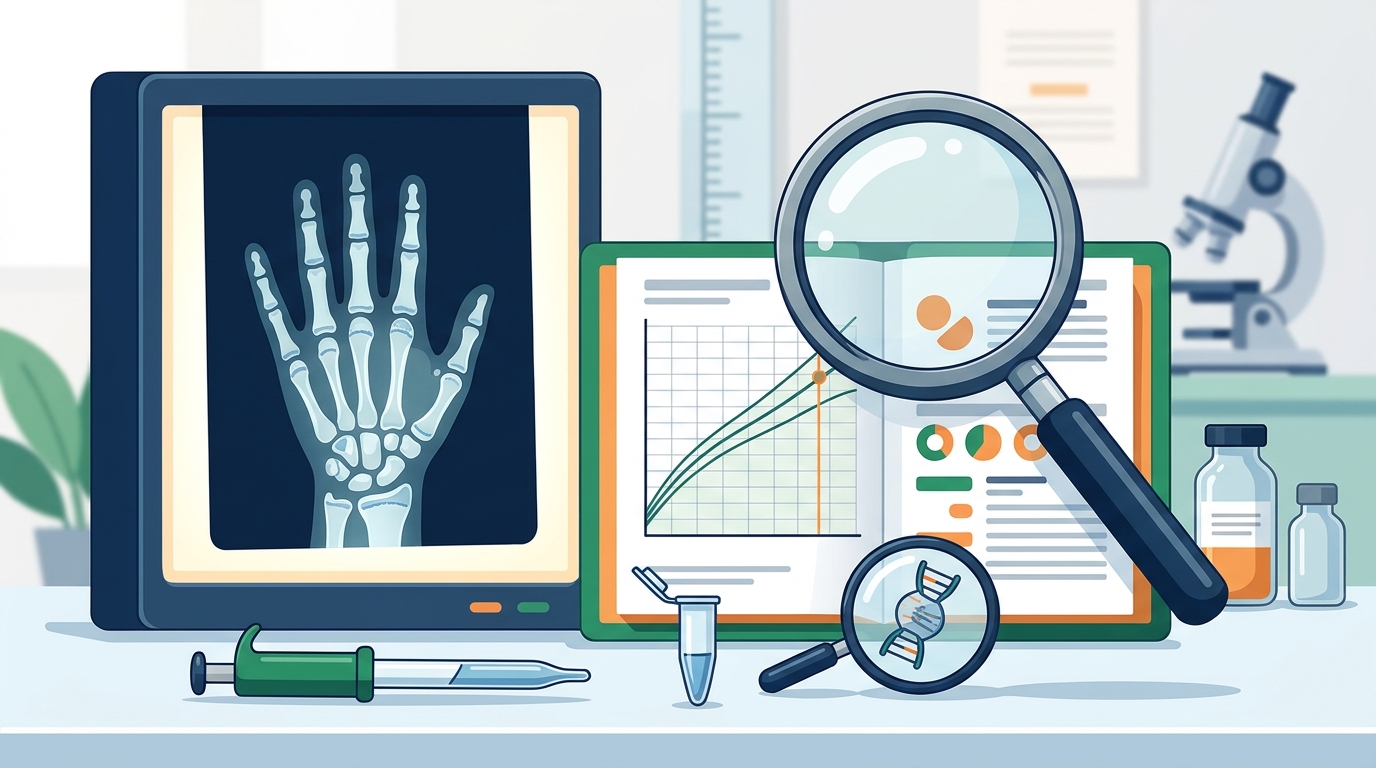
A left hand and wrist X-ray estimates skeletal maturity. A delayed bone age, such as a 13-year-old having a bone age of 11, suggests remaining growth potential. This is a critical component of the delayed bone age evaluation.
Step 3: Laboratory Testing
Blood tests are used to measure hormone levels. IGF-1 testing evaluates growth hormone activity, as IGF-1 is stimulated by HGH. However, low IGF-1 alone does not confirm GHD, as it can be affected by nutrition, thyroid function, and puberty stage.
Distinguishing GHD from Other Conditions
Not every short child has growth hormone deficiency. Accurate diagnosis helps distinguish normal growth variation from conditions requiring medical treatment. Clinicians must rule out other causes before confirming GHD.
Constitutional Growth Delay
Often called "late bloomers," these children have delayed skeletal development and puberty but typically reach a height consistent with their family background. This is a normal variation rather than a disease. You can learn more about this pattern in our guide to constitutional growth delay.
Idiopathic Short Stature
This is a separate diagnosis involving significant short stature without an identified underlying disease. It is distinct from GHD, where a specific hormonal deficit is present.
Other Medical Conditions
Thyroid disorders, nutritional deficiencies, and chronic illnesses can also affect height. Persistent poor growth velocity, weight loss, or systemic symptoms may suggest an alternative explanation to GHD.
Treatment Eligibility and Next Steps
Prescription recombinant HGH therapy can improve growth in children with appropriate medical indications. However, treatment eligibility varies significantly from child to child. A comprehensive growth evaluation can identify potential causes, assess remaining growth potential, and determine whether treatment is appropriate.
At HGH for Children, our approach focuses on evidence-based evaluation. We review growth patterns, bone age, and hormone levels to build a clear picture of your child's development. This thorough approach helps identify important growth factors and supports informed decisions throughout the evaluation process.
If you are concerned about your child's growth, the first step is a professional assessment. Our team provides clear answers and a practical plan for what to do next, ensuring that any treatment decisions are based on comprehensive data rather than guesswork.
Key Takeaways
- Growth Hormone Deficiency is a specific medical condition, not just a description of being short.
- Growth velocity is often a more reliable indicator than height percentile alone.
- Bone age X-rays are essential for assessing skeletal maturity and remaining growth potential.
- Low IGF-1 levels require context; they do not automatically confirm GHD.
- Constitutional growth delay and idiopathic short stature are distinct from GHD.
- A comprehensive evaluation by a growth specialist is necessary for accurate diagnosis.
Frequently Asked Questions
What is the most common sign of growth hormone deficiency?
The most common sign is slow growth velocity, typically less than 2 inches per year after age 4, combined with short stature relative to peers.
Can a single blood test diagnose GHD?
No. Diagnosis requires a combination of growth history, bone age assessment, and multiple laboratory tests, including IGF-1 and stimulation tests.
Is being shorter than classmates a sign of GHD?
Not necessarily. Genetics and constitutional delay often explain height differences. A change in growth pattern is more indicative of a medical issue.
How is bone age determined?
Bone age is determined through an X-ray of the left hand and wrist, which is compared to established skeletal maturation standards.
What is the role of IGF-1 in diagnosis?
IGF-1 is a marker of growth hormone activity. Low levels may suggest GHD, but they must be interpreted alongside other clinical findings.
Can GHD be treated?
Yes, eligible children with confirmed GHD can be treated with prescription growth hormone therapy under medical supervision.
Next Steps for Parents
Understanding the signs of growth hormone deficiency is the first step toward supporting your child's healthy development. If you have questions about your child's growth pattern, to schedule a consultation. We are dedicated to providing clear, evidence-based guidance for families across California.