

Accurate growth measurement is the foundation of any pediatric growth evaluation. Clinicians use standardized tools to track height, weight, and body mass index over time. These data points reveal growth velocity, which indicates how fast a child is growing. At HGH for Children, we analyze these metrics to distinguish normal variation from conditions requiring medical attention. This process helps determine if a child is following their expected genetic trajectory. according to Growth Charts CDC
The Standardization of Height and Weight Measurements
Consistency is the most critical factor in accurate growth tracking. A single measurement provides a snapshot, but a series of measurements reveals the trend. Clinicians use stadiometers for standing height and scales for weight. For infants and young children, length is measured supine on a calibrated board. The difference between standing height and recumbent length is approximately 0.7 centimeters. This distinction matters when comparing data across different age groups.
Weight is measured in kilograms to standardize data globally. Body Mass Index (BMI) is calculated from height and weight. BMI is a screening tool that helps identify underweight or overweight status. It does not diagnose obesity or malnutrition on its own. However, a sudden change in BMI percentile can signal underlying health issues. For example, a child whose BMI drops from the 50th to the 10th percentile in six months warrants further investigation. This change may indicate nutritional deficiencies or chronic illness.
Understanding Growth Velocity and Percentile Curves
Growth velocity is the rate of change in height over a specific period. It is calculated by subtracting the previous height from the current height and dividing by the time elapsed. For school-age children, a velocity of less than 4 centimeters per year may indicate a growth disorder. Before puberty, children typically grow 5 to 6 centimeters annually. During the pubertal growth spurt, this rate can increase to 8 to 12 centimeters per year. Tracking this velocity is more informative than looking at a single height percentile.
Percentile curves plot a child's measurements against a reference population. The 50th percentile represents the median, or average, height. A child at the 10th percentile is shorter than 90% of their peers. However, a low percentile is not inherently abnormal. Many healthy children fall in the lower percentiles due to genetics. The key is whether the child remains on the same curve or crosses percentiles downward. Falling across two or more major percentile lines suggests a change in growth pattern. This crossing of percentiles is a primary indicator for further diagnostic testing.
Interpreting Bone Age and Skeletal Maturity
Bone age is a measure of skeletal maturity determined by X-ray imaging of the left hand and wrist. It reflects how mature the bones appear compared to chronological age. A delayed bone age means the skeleton is less mature than the child's actual age. This often indicates remaining growth potential. For instance, a 12-year-old with a bone age of 10 may have two more years of significant growth. Conversely, an advanced bone age suggests the growth plates are closing earlier than expected.
Clinicians use the Greulich and Pyle Atlas to assess bone age. This method compares the child's X-ray to standard images of bones at various ages. The assessment helps predict adult height. It also determines the urgency of treatment. If a child has a delayed bone age and a family history of late puberty, they may simply be a constitutional delay of growth and puberty. This condition often resolves without intervention. However, if the bone age is delayed but growth velocity is poor, other causes like growth hormone deficiency must be ruled out. Understanding this distinction is vital for appropriate care.
The Role of Mid-Parental Height in Prediction
Mid-parental height is a genetic estimate of a child's potential adult height. It is calculated using the heights of both parents. For boys, the formula adds 13 centimeters to the sum of the parents' heights and divides by two. For girls, it subtracts 13 centimeters. This calculation provides a target range. If a child's predicted adult height falls significantly below their mid-parental height, it may indicate a growth disorder. This discrepancy prompts clinicians to look for underlying medical causes.
Genetics account for approximately 80% of adult height variation. However, environmental factors like nutrition and health also play a role. A child who is consistently below their mid-parental height range may need evaluation. This does not mean they will not reach their genetic potential. It means the current trajectory is not aligned with their genetic background. At HGH for Children, we use this data to set realistic expectations. We help parents understand the difference between normal genetic variation and a medical condition that requires treatment.
Integrating Data for a Comprehensive Evaluation
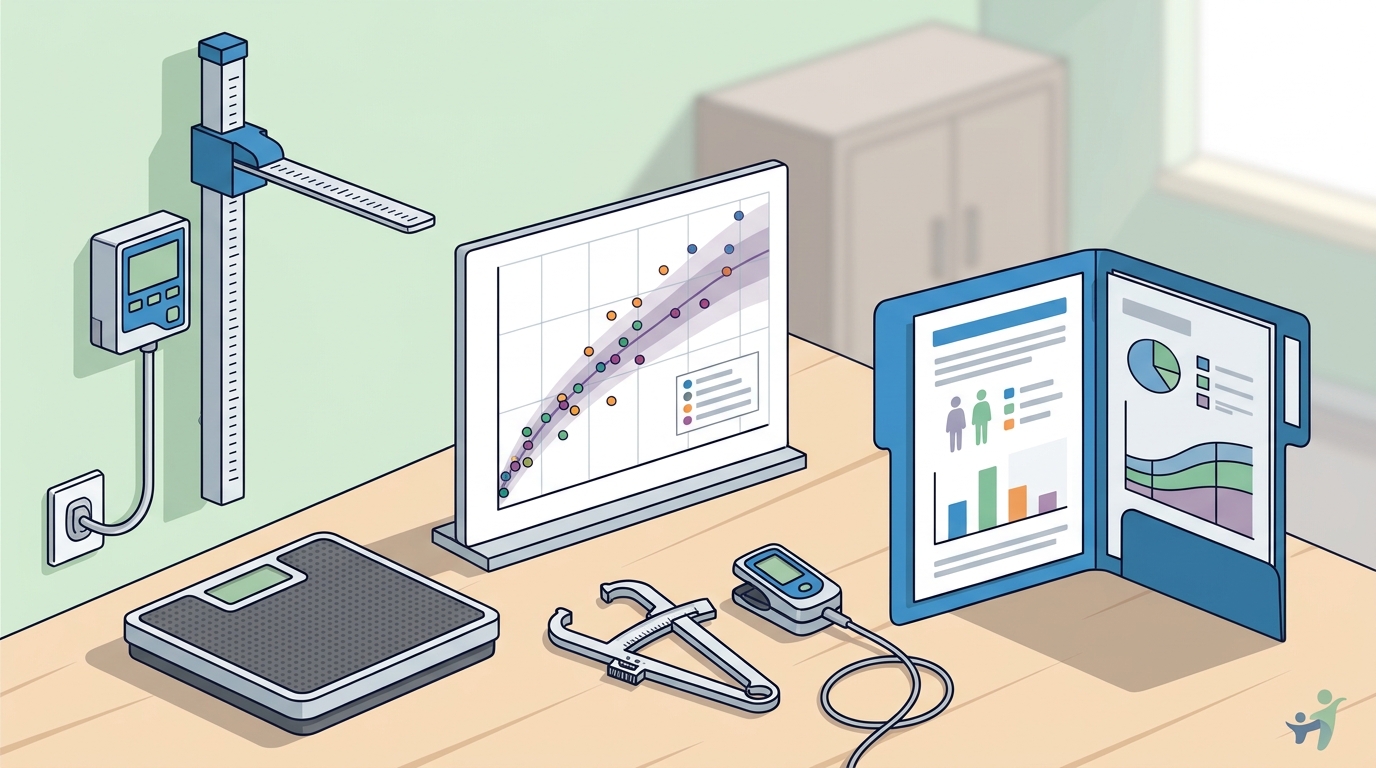
No single measurement tells the whole story. A comprehensive evaluation integrates height, weight, BMI, growth velocity, bone age, and mid-parental height. This holistic approach allows clinicians to identify patterns. For example, a child with short stature, delayed bone age, and low growth velocity may have growth hormone deficiency. Another child with the same short stature but normal velocity and delayed bone age may have constitutional delay. The interpretation depends on the combination of findings.
Laboratory tests often accompany these measurements. Insulin-like Growth Factor 1 (IGF-1) levels reflect growth hormone activity. Low IGF-1 can indicate growth hormone deficiency, but it can also result from poor nutrition or liver disease. Therefore, IGF-1 must be interpreted in the context of the child's overall health. Thyroid function tests are also common, as hypothyroidism can affect growth. By combining physical measurements with lab results, clinicians build a complete picture. This ensures that any diagnosis is accurate and that treatment is targeted to the specific cause.
Key Takeaways
- Consistent measurement techniques are essential for tracking growth over time. according to Growth Charts CDC
- Growth velocity is a more reliable indicator of health than a single height percentile.
- Crossing percentile lines downward is a key sign of a changing growth pattern.
- Bone age assessment helps determine remaining growth potential and skeletal maturity.
- Mid-parental height provides a genetic baseline for predicting adult height.
- Integrating physical measurements with lab results ensures accurate diagnosis.
Frequently Asked Questions
How often should a child's height be measured?
For healthy children, height is typically measured at well-child visits, which occur every six to twelve months. For children with growth concerns, more frequent monitoring, such as every three to six months, may be recommended to accurately calculate growth velocity.
What is a normal growth velocity for a school-age child?
Before puberty, children generally grow between 4 and 6 centimeters per year. A velocity consistently below 4 centimeters per year may warrant further evaluation to rule out underlying growth disorders.
Does a low height percentile always mean a problem?
No. Many healthy children are shorter than average due to genetics. A low percentile is only concerning if the child is falling across percentile lines or if their growth velocity is significantly reduced.
How is bone age determined?
Bone age is determined by taking an X-ray of the left hand and wrist. The images are compared to standard reference charts to estimate skeletal maturity relative to the child's chronological age.
Can growth measurements predict adult height accurately?
While measurements like mid-parental height and bone age provide estimates, they are not guarantees. Adult height is influenced by genetics, nutrition, and health factors. Predictions are useful for monitoring but not absolute.
Conclusion
Understanding how growth measurements are taken and interpreted is the first step in addressing pediatric growth concerns. By tracking height, weight, and bone age, clinicians can identify patterns that indicate normal development or underlying medical conditions. At HGH for Children, we provide comprehensive evaluations to help families understand their child's growth trajectory. If you have questions about your child's growth, to schedule a consultation.