

During the first year of life, healthy infants typically gain approximately 20 to 25 pounds and increase in length by 10 to 12 inches. This rapid physical development is the fastest growth phase of a human lifetime. At HGH for Children, we emphasize that tracking these milestones helps parents distinguish normal variation from potential growth concerns early.
Weight Gain Patterns in the First 12 Months
Weight is often the most visible indicator of infant health. Weight gain is the primary metric used to assess nutritional status in the first year. Most babies double their birth weight by around five months of age. By their first birthday, a typical infant will have tripled their birth weight. For example, a baby born at 7 pounds would be expected to weigh approximately 21 pounds by age one. This trajectory assumes adequate caloric intake and the absence of chronic illness.
Parents should monitor the consistency of weight gain rather than focusing solely on a single number. A baby who gains weight steadily along their specific percentile curve is generally healthy. Significant drops in percentile or a plateau in weight gain may warrant a pediatric evaluation. Understanding these patterns helps families identify when to seek professional guidance.
Length and Height Progression
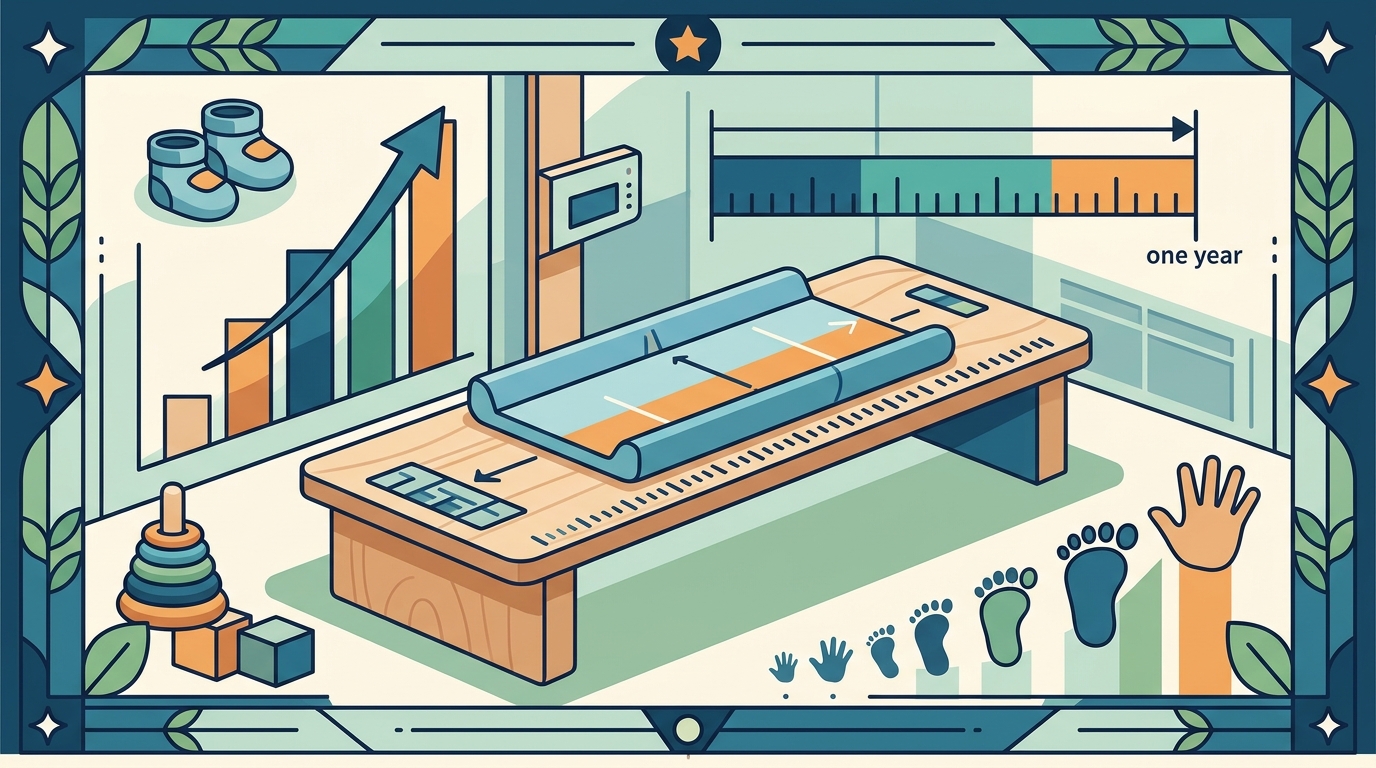
Length growth is slower than weight gain but remains substantial. Length growth is the measure of linear physical development during infancy. Infants typically grow about 10 to 12 inches in their first year. The first three months are particularly rapid, with babies gaining about 1 inch per month. From four to twelve months, the rate slows to approximately 0.5 inches per month. By the end of the first year, a baby’s length is roughly 50% greater than their birth length.
Tracking length requires consistent measurement techniques. Lying down measurements are more accurate for infants than standing measurements. Variations in measurement method can skew data, so using the same technique at each visit is crucial. This consistency allows clinicians to plot accurate growth curves over time.
Head Circumference and Neurological Development
Head circumference is a critical marker of brain growth. Head circumference is the measurement of the largest part of the head, used to track neurological development. In the first year, the head grows by approximately 12 inches in circumference. The first six months see the most rapid expansion, with about 2 inches of growth. From six to twelve months, growth slows to about 1 inch. This metric is vital because it reflects brain volume and development.
Deviations in head growth can indicate underlying neurological or genetic conditions. Both microcephaly and macrocephaly require medical attention. Regular tracking ensures that brain development aligns with physical growth. This comprehensive approach allows for early intervention if developmental delays are suspected.
Understanding Growth Percentiles
Percentiles provide context for an individual child’s growth. Growth percentiles are statistical rankings that compare a child’s measurements to a reference population. A baby at the 50th percentile for weight is heavier than 50% of babies the same age and sex. Being at a lower or higher percentile is not inherently problematic if the child remains consistent. The key is the trajectory of the curve over time.
Parents often worry if their child is in the 10th or 90th percentile. However, consistency is more important than the specific number. A child who stays at the 10th percentile is following a normal pattern. A child who drops from the 75th to the 25th percentile may be experiencing a growth issue. Pediatricians use these trends to determine if further investigation is needed. according to How Much and
When to Seek Professional Evaluation
Most infants follow predictable growth patterns, but some require closer monitoring. Growth faltering is a significant drop in growth velocity that may indicate underlying health issues. Signs include failure to gain weight, loss of percentiles, or poor feeding. Chronic conditions, genetic syndromes, or hormonal imbalances can affect growth. Early identification allows for timely treatment and better long-term outcomes.
At HGH for Children, we provide specialized evaluations for children with growth concerns. Our team reviews growth charts, bone age, and hormonal profiles to determine the cause of slow growth. If you notice your baby is not gaining weight or length as expected, a consultation can provide clarity and peace of mind.
Key Takeaways
- Babies typically gain 20 to 25 pounds in their first year.
- Length increases by 10 to 12 inches during the first 12 months.
- Head circumference grows by about 12 inches, reflecting brain development.
- Consistency in percentile tracking is more important than a single measurement.
- Weight doubling by five months and tripling by one year are standard benchmarks.
- Significant drops in growth percentiles warrant medical evaluation.
- Regular pediatric check-ups are essential for monitoring growth trajectories.
Frequently Asked Questions
How much should a baby gain in weight each month?
In the first three months, babies typically gain about 1 to 1.25 pounds per month. From four to six months, the rate slows to about 0.75 to 1 pound per month. From seven to twelve months, weight gain is approximately 0.5 to 0.75 pounds per month. Individual variation is normal, but consistent tracking is key.
Is it normal for babies to grow at different rates?
Yes, individual variation is common. Genetics, nutrition, and overall health influence growth speed. As long as a baby follows their own growth curve consistently, they are likely healthy. Sudden changes in growth velocity are more concerning than slow or fast growth in isolation.
What is the average length of a baby at one year?
The average length for a one-year-old is approximately 29 to 30 inches. This varies by sex, with boys typically slightly longer than girls. The exact number matters less than the consistency of growth over time.
When should I be concerned about my baby's growth?
Concern is warranted if a baby fails to gain weight, drops significantly across percentiles, or shows signs of poor feeding. Chronic illness or developmental delays may also be indicators. Consult a pediatrician if you notice these changes.
Do growth charts differ for boys and girls?
Yes, separate growth charts exist for boys and girls. Boys tend to be slightly heavier and longer at birth and throughout infancy. Using the correct chart for your child’s sex ensures accurate percentile assessment.
Conclusion
Understanding typical infant growth rates empowers parents to monitor their child’s development effectively. While individual variation is normal, consistent tracking of weight, length, and head circumference provides valuable insights. If you have questions about your child’s growth, for a personalized evaluation. At HGH for Children, we are dedicated to supporting healthy growth and development.