

When a child grows slower than expected, parents often wonder which specialist to see. A pediatric endocrinologist is a physician who specializes in the hormonal systems that regulate growth, puberty, and metabolism in children. These doctors evaluate growth patterns, bone age, and hormone levels to determine if a medical condition is affecting development. At HGH for Children, we help families understand the role of these specialists in assessing short stature and growth delays. according to Hypothyroidism and Your
The Role of a Pediatric Endocrinologist
Many parents assume that any doctor who treats children can diagnose growth disorders. In reality, growth issues often require specialized hormonal testing that general pediatricians may not perform. A pediatric endocrinologist is a medical professional trained to interpret complex hormone panels and skeletal maturity data. They look beyond simple height measurements to understand the biological mechanisms driving a child's development.
For example, a child with a delayed bone age may appear younger than their chronological age. A general practitioner might note this, but an endocrinologist will correlate it with insulin-like growth factor 1 levels and pubertal stage. This detailed analysis helps distinguish between normal variation and a condition requiring intervention. Understanding this distinction is the first step in managing your child's growth health.
How Growth Disorders Are Diagnosed
Diagnosis begins with a comprehensive review of the child's growth history. Clinicians analyze growth velocity, which is the rate of height gain over time, rather than just a single height measurement. Growth velocity is a critical metric because it reveals whether a child is maintaining their expected growth curve or falling off it. A child who grows less than 2 inches per year after age 4 may warrant further investigation.
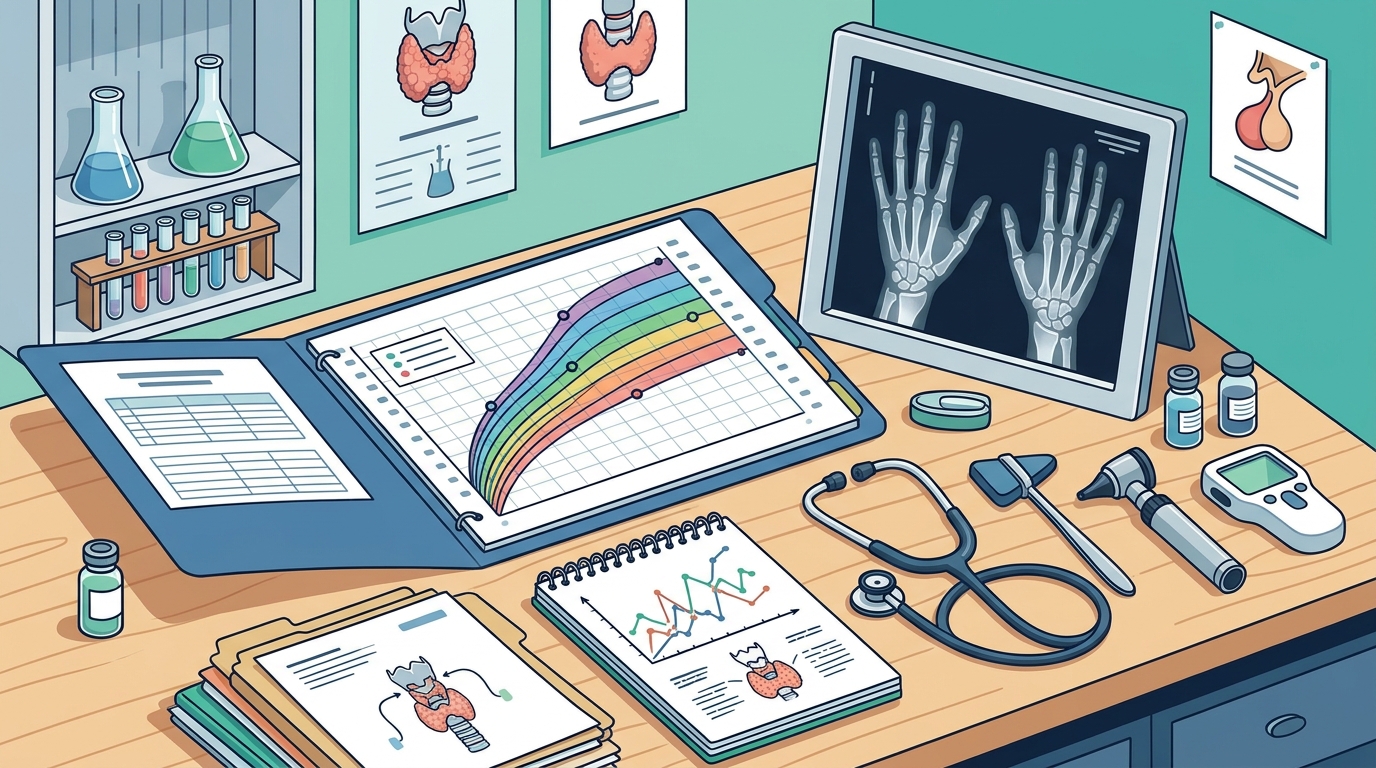
Imaging plays a key role in this process. A bone age X-ray of the left hand and wrist is a standard tool used to estimate skeletal maturity. This test helps determine how much growth potential remains. If the bones are less mature than the child's actual age, there may be more time for growth. However, if the bones are mature, the window for height increase may be closing. Accurate diagnosis relies on combining these imaging results with blood tests and physical examinations.
Common Conditions Treated
Not every short child has a hormone disorder. Pediatric endocrinologists evaluate a range of conditions that can impact height. Growth Hormone Deficiency is a specific diagnosis where the pituitary gland does not produce enough growth hormone. This condition is relatively uncommon but treatable with prescription therapy. Other conditions include constitutional growth delay, where children are late bloomers but typically reach normal adult height.
Idiopathic short stature is another diagnosis where a child is significantly short without an identifiable underlying disease. Distinguishing between these conditions is vital because the treatment approach differs for each. For instance, constitutional delay often requires monitoring rather than medication, while growth hormone deficiency may require specific hormonal therapy. The specialist's job is to identify the root cause before recommending any treatment plan.
What to Expect During an Evaluation
Preparing for a growth evaluation involves gathering your child's medical records. Clinicians need accurate height and weight measurements taken over several years to calculate growth velocity. Bring any previous growth charts, bone age X-rays, and lab results to the appointment. This data helps the specialist see the trend rather than just a snapshot. It allows for a more precise assessment of the child's developmental trajectory. according to Key Metrics for
During the consultation, the doctor will discuss family history, including the heights of both parents. Mid-parental height provides a genetic baseline for expected adult height. The specialist will compare the child's current trajectory against this genetic target. This conversation helps set realistic expectations for the family. It also clarifies whether the child's growth is within the family's normal range or if it deviates significantly.
Treatment Options and Monitoring
Treatment decisions depend entirely on the diagnosis. For children with confirmed growth hormone deficiency, prescription recombinant growth hormone therapy may be an option. This treatment requires careful medical supervision and regular monitoring of hormone levels and side effects. It is not a one-size-fits-all solution and is not suitable for every child with short stature. The goal is to support healthy development, not just to increase height for its own sake.
Monitoring is a continuous process. Even after treatment begins, regular check-ups are necessary to track progress and adjust the plan as needed. Some children may require long-term follow-up to ensure they reach their full potential. At HGH for Children, we emphasize that treatment is a partnership between the family and the medical team. Open communication about concerns and progress is essential for the best outcomes.
Key Takeaways
- A pediatric endocrinologist specializes in hormonal causes of growth issues, offering expertise beyond general pediatrics.
- Growth velocity, or the rate of height gain, is often more important than a single height measurement.
- Bone age X-rays help estimate skeletal maturity and remaining growth potential.
- Constitutional growth delay is a normal variation, while growth hormone deficiency is a medical condition.
- Accurate diagnosis requires a review of growth history, family height, and laboratory testing.
- Treatment options vary by diagnosis and require individualized medical assessment.
Frequently Asked Questions
What is a pediatric endocrinologist?
A pediatric endocrinologist is a doctor who specializes in the diagnosis and treatment of hormonal disorders in children, including those affecting growth and puberty.
How is bone age determined?
Bone age is determined through an X-ray of the left hand and wrist, which is compared to standard skeletal maturity charts.
Does every short child need treatment?
No, not every short child needs treatment. Many are simply late bloomers or have familial short stature that does not require medical intervention.
What tests are involved in a growth evaluation?
Evaluations typically include growth chart analysis, bone age X-rays, and blood tests for hormones like IGF-1 and thyroid function.
Can growth hormone therapy increase adult height?
Growth hormone therapy can improve growth in children with specific diagnoses like growth hormone deficiency, but outcomes vary and are not guaranteed for all conditions.
Next Steps for Parents
Understanding the role of a pediatric endocrinologist empowers parents to make informed decisions about their child's health. If you have concerns about your child's growth, start by gathering their medical records and noting any changes in their development. For families in California, HGH for Children provides specialized guidance on growth patterns and hormone health. To begin your child's evaluation, to schedule a consultation.