

Virtual pediatric growth consultations allow families to access specialized care without traveling to a physical clinic. At HGH for Children, these remote evaluations focus on reviewing growth history, interpreting bone age, and assessing hormone levels. This process helps determine if a child’s growth pattern requires further investigation or treatment.
1. Pre-Consultation Document Collection
Parents gather historical growth records and prior test results before the video call.
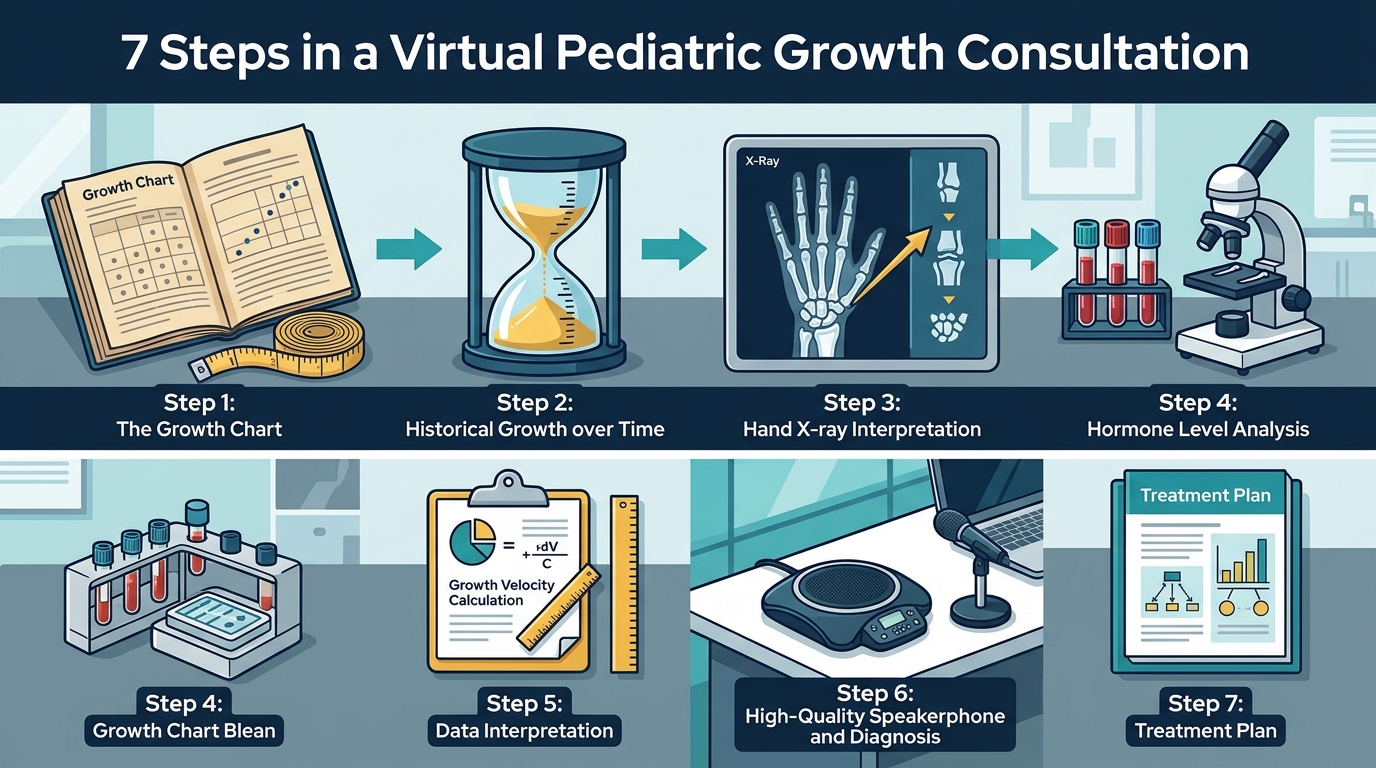
Before the appointment, families collect dated height and weight measurements from pediatrician visits. You should also gather any previous bone age X-rays and laboratory reports, such as IGF-1 or thyroid panels. These documents provide the baseline data needed to calculate growth velocity accurately.
2. Growth History and Velocity Review
The specialist analyzes the trajectory of growth over time rather than a single measurement.
During the initial phase of the consultation, the provider reviews the collected growth charts. The focus is on calculating growth velocity, which is the rate of height increase per year. A child growing less than 2 inches per year after age 4 may warrant further evaluation, depending on their pubertal stage.
3. Family Height and Genetic Context
Midparental height helps establish the expected genetic range for the child.
The provider calculates midparental height using the heights of both biological parents. This estimate provides a genetic target for the child’s adult height. Comparing the child’s current trajectory against this family range helps identify if the growth pattern is consistent with genetics or if a deviation exists.
4. Bone Age Interpretation
Skeletal maturity is assessed using existing X-ray images to estimate remaining growth potential.
Bone age is a measure of skeletal maturity that often differs from chronological age. In a virtual setting, the specialist reviews previously obtained hand and wrist X-rays. A delayed bone age suggests that growth plates may remain open longer, which can indicate additional growth potential, though it does not automatically require treatment.
5. Hormone and Laboratory Data Analysis
Existing blood work results are interpreted in the context of the child’s overall health.
The provider reviews laboratory results, including IGF-1, IGFBP-3, and thyroid function tests. Low IGF-1 levels can be associated with growth hormone deficiency, but they can also result from nutritional deficiencies or other conditions. These results are never interpreted in isolation but are weighed against growth velocity and bone age.
6. Pubertal Development Assessment
The timing of puberty influences the window of opportunity for growth interventions.
The specialist discusses the child’s current pubertal stage, often using the Tanner scale. Delayed puberty can be a sign of constitutional growth delay, where a child is simply a late bloomer. Understanding where the child stands in their developmental timeline is critical for predicting adult height and determining if intervention is appropriate.
7. Personalized Action Plan and Follow-Up
The consultation concludes with a clear plan for monitoring, testing, or treatment.
Based on the data reviewed, the provider outlines the next steps. This may involve continued observation, additional local testing, or a discussion about treatment options like growth hormone therapy. The plan is individualized to the child’s specific diagnosis and remaining growth potential.
Choosing the Right Approach
When deciding whether to pursue a virtual consultation, consider the availability of your child’s historical records. If you have consistent growth charts and recent lab work, a remote evaluation can provide a comprehensive overview. If records are sparse, the provider may recommend local testing before a full virtual assessment.
Frequently Asked Questions
Can a virtual consultation diagnose growth hormone deficiency?
A virtual consultation can identify patterns suggestive of growth hormone deficiency, but a definitive diagnosis often requires specific stimulation testing that may need to be performed locally. The virtual provider will guide you on which tests are necessary to confirm or rule out the condition.
Do I need to be in California for a virtual appointment?
Virtual consultations can often be conducted across state lines, depending on the provider’s licensing and the specific services offered. HGH for Children serves families in California and may offer telemedicine options for evaluation and planning.
What documents should I have ready for the video call?
You should have dated growth charts, previous bone age X-rays, and recent laboratory results, such as IGF-1 and thyroid panels. Having these documents organized ensures the provider can accurately calculate growth velocity and interpret the data during the session.
Is bone age X-ray required for a virtual consultation?
While not always mandatory for the initial chat, a bone age X-ray is highly valuable for assessing skeletal maturity. If you do not have a recent X-ray, the provider may recommend obtaining one locally to complete the evaluation.
How long does a virtual growth consultation typically take?
A comprehensive virtual growth consultation usually lasts between 45 to 60 minutes. This allows sufficient time to review historical data, discuss family history, and formulate a personalized action plan.
Next Steps for Your Child’s Growth
If you are concerned about your child’s growth pattern, a structured evaluation is the best way to find answers. At HGH for Children, we provide personalized guidance to help you understand your child’s development. To begin your assessment, to schedule a consultation.